
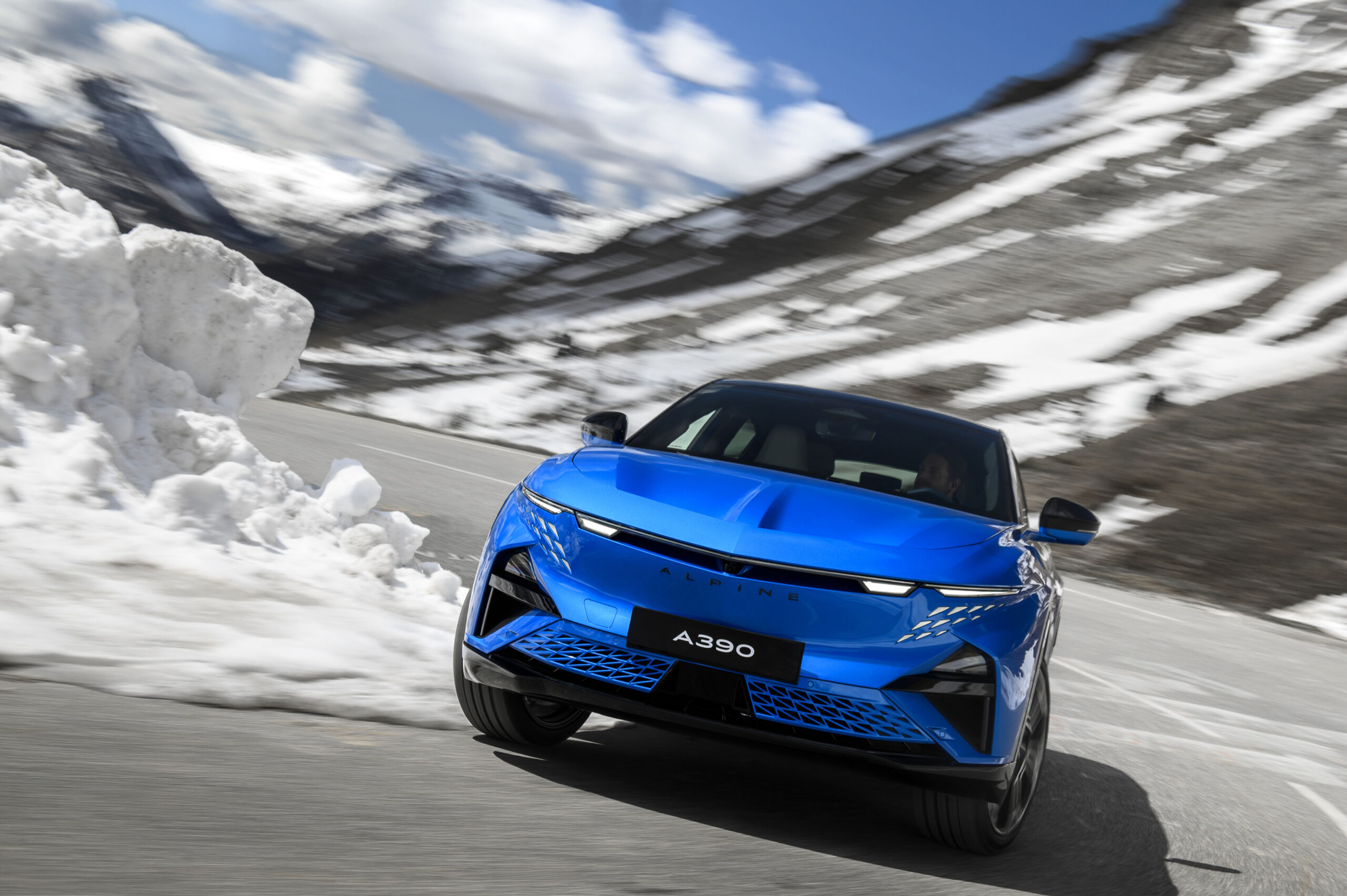
- Alpine A390 to feature one-of-a-kind torque vectoring system designed by Alpine
- The most powerful Alpine to date equipped with the ability to distribute 0-100% of the torque between the two rear wheels
- Patented development allows the car to give drivers the feeling of lightness in the all-eectric sports fastback
Alpine A390, Alpine’s new all-electric fastback sports car, features a one-of-a-kind three-motor architecture: the one at the front powers the front axle and the two at the rear power one wheel each. Besides enabling all-wheel drive, this configuration opened the door to managing the two rear motors independently – and thus opened up exciting new possibilities for Alpine’s engineering team, which designed a system that outperforms mechanical limited-slip differentials with extra-precise and quick torque control on each rear wheel. Alpine is unveiling Active Torque Vectoring, the result of five years of development and fine-tuning, and Constance Leraud-Reyser, an Alpine control systems engineer, tells us about this game-changing feature available on A390.
“Alpine Active Torque Vectoring is the step beyond conventional limited-slip differentials. This patented breakthrough can distribute anywhere between 0 and 100% of the torque between the two rear wheels, enhancing Alpine A390’s safety as well as its dynamic behaviour”.
Constance Leraud-Reyser, control systems engineer, Alpine
Alpine A390, a five-seat fastback sports car engineered for breathtaking performance
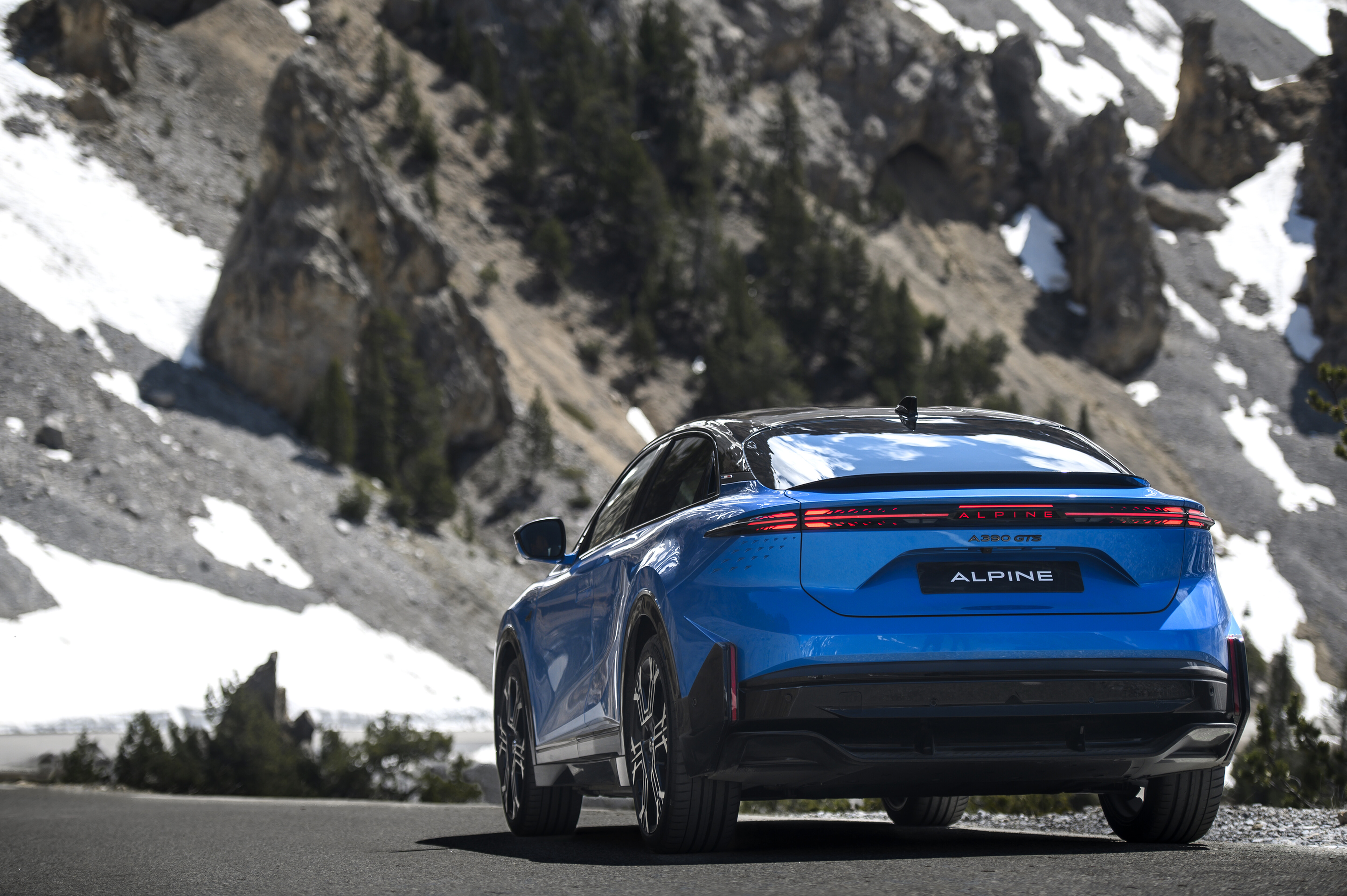
A390 GTS is the first Alpine with more than 400 hp under the bonnet and over 800 Nm of torque – stats that enable it to fire from 0 to 100 km/h in under 4 seconds and sprint 1,000 metres from a standing start in 22 seconds – providing the exhilaration and performance that define sports cars. But, true to Alpine tradition, A390 does more than boast impressive numbers: it strikes a flawless balance between agility and efficiency, treating drivers to an unrivalled experience.
“To achieve that, Alpine didn’t stop at fitting its first fastback sports car with all-wheel drive and traction-control systems. A390 is also the first to feature Alpine Active Torque Vectoring, a breakthrough that continuously maximises the torque transmitted to the wheels,” Constance continues.
Alpine Active Torque Vectoring is more than a limited-slip differential: it’s a game-changer
Alpine Active Torque Vectoring creates a variable torque split, generating a difference in torque distribution to the rear wheels, in response to steering angle and vehicle speed. This corrects any differences in slip between the right and left wheels and optimises cornering dynamics. “This eliminates the slightest hint of oversteer or understeer,” Constance adds.
Alpine Active Torque Vectoring acts ultrafast – in milliseconds – regardless of whether you are accelerating, turning or driving straight.
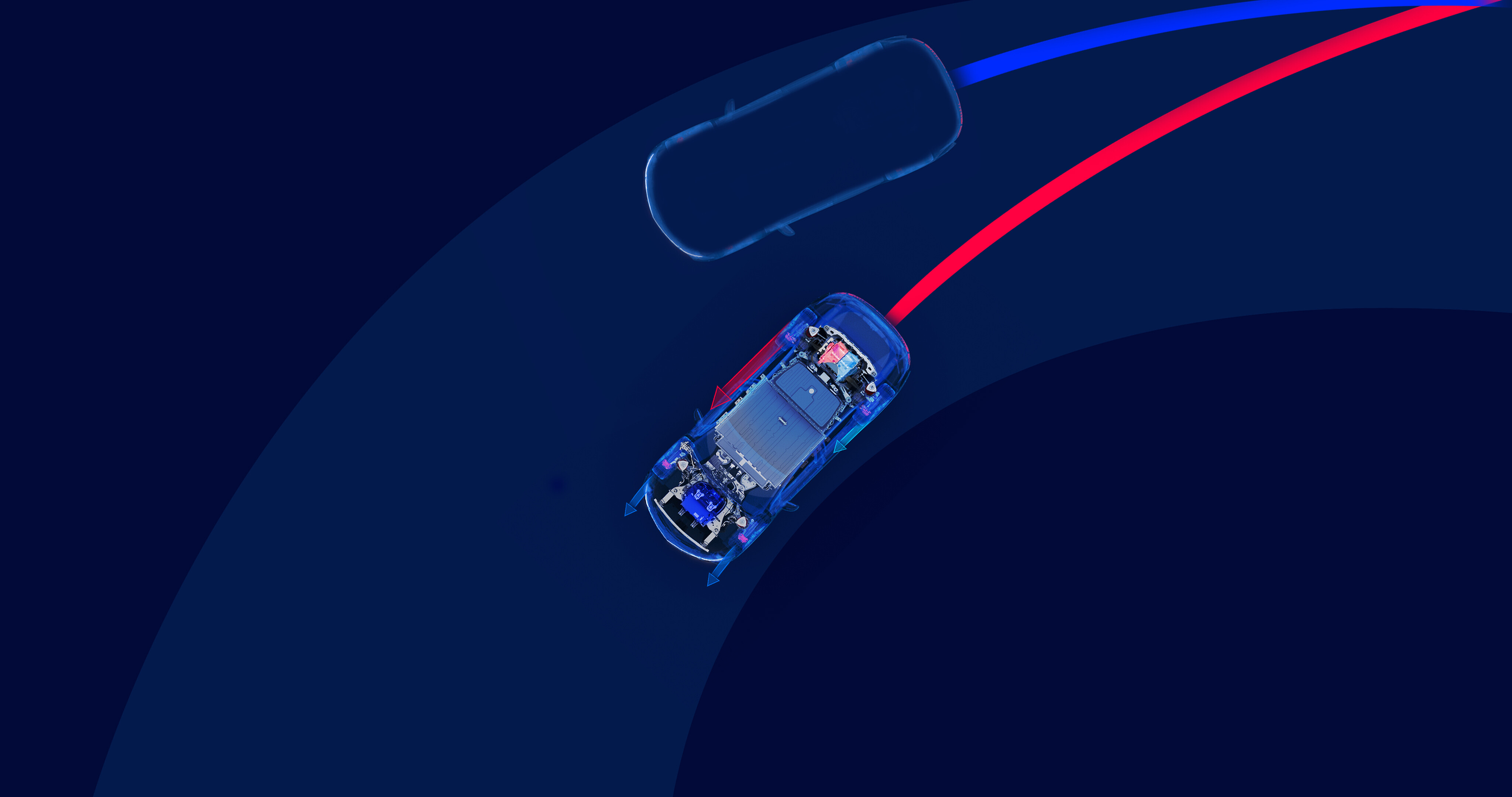
Alpine Active Torque Vectoring, in other words, make A390 more responsive and easier to handle. “When you’re behind the wheel, the feeling of inertia – perceived inertia – from the vehicle’s size and weight simply vanishes. All you feel is pure sensation to make one with the car” Constance confides.
Alpine Active Torque Vectoring improves the driving safety of the Alpine A390 by enhancing traction. Specifically, if one of the rear wheels skids on a patch of ice, the torque will be corrected to optimise road holding.
To keep the driver informed, a separate display in the instrument cluster and the Alpine Telemetrics Live Data screen provide a real-time feed on Alpine Active Torque Vectoring’s operation.
Sharper handling with three torque management systems and five driving modes
Three complementary systems manage torque: Alpine Torque Pre-Control handles traction, e-AWD distributes torque between the front and rear axles to balance the vehicle on turns, and Alpine Active Torque Vectoring distributes torque between the left and right rear wheels.
The A390 has five driving modes that can be selected using the dedicated button on the steering wheel: Save, Normal, Sport, Personalised and a new Track mode. Depending on the driver’s choice of customisation, the steering angle and speed, Alpine Active Torque Vectoring distributes torque differently between the left and right wheels, emphasising agility, cornering dynamics or stability at high speeds.
“With Alpine Active Torque Vectoring, we have made A390 as agile and swift as A110! It’s actually so efficient that A390 is astonishingly easy to drive when you consider its power and performance,” Constance Leraud-Reyser concludes with a smile.