
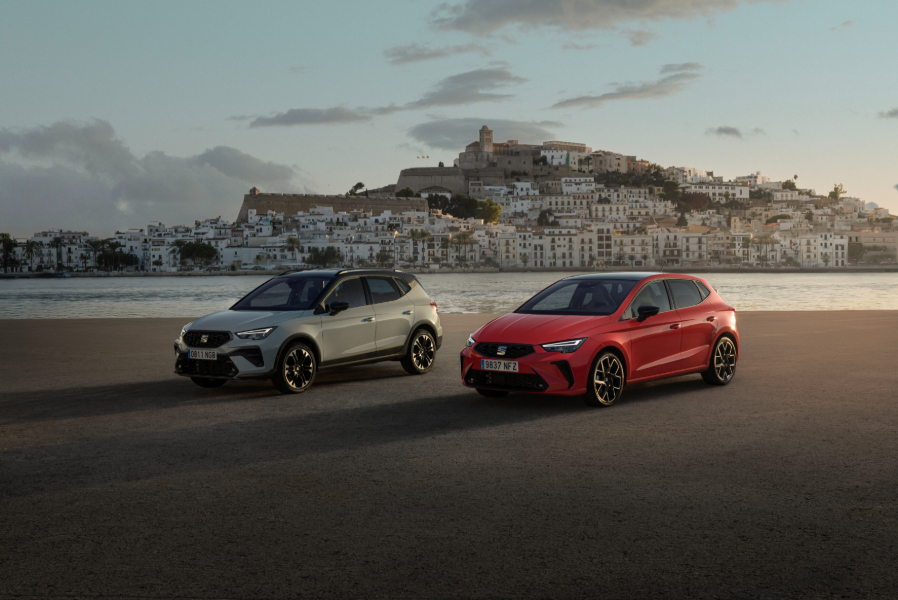
- The updated exterior designs of both models offer a new look with youthful and dynamic character
- Inside the cabin, quality steps up with a more refined interior
- More value than ever: a choice of efficient TSI engines, enhanced standard equipment, and advanced safety features
Milton Keynes, 29/10/2025. Marking its 75th anniversary, SEAT is entering an exciting new chapter by refreshing two of its most popular models – the Ibiza and the Arona. These updates not only celebrate the brand’s heritage but also reinforce its commitment to accessible mobility.
The new SEAT Ibiza and Arona keep raising the bar in their segments with vibrant design and advanced technology. Both vehicles take a new step forward, driven by three key pillars: a refreshed exterior, a refined interior and a stronger overall value proposition.
“The SEAT Ibiza and Arona are true success stories, fundamental to our line-up and the brand’s growth. As two of the SEAT’s most iconic models, they have played a key role in driving urban mobility and empowering people to move freely toward new possibilities.” said Markus Haupt, CEO of SEAT. “With refreshed exterior and enhanced interior, we’re boosting their value and appeal even further. At the same time, we’re preparing both models for the future, with upcoming EU7 compliance and the introduction of mild-hybrid powertrains.”
The SEAT Ibiza is a true icon in its segment. Since its debut in 1984, it has sold over 6 million units across five generations—constantly evolving, embracing fresh ideas, and inspiring a youthful, creative, and forward-thinking spirit.
The SEAT Arona urban SUV, has built a strong following since its launch in 2017. With over 750,000 units sold, it continues to deliver for drivers seeking an energetic, youthful SUV ready to take on every urban challenge.
REFRESHED EXTERIOR
The new SEAT Ibiza and Arona bring a more characterful design that reflects the evolving needs of today’s drivers. Both models now feature updated styling, vibrant new colours, and a completely renewed range of alloy wheels — available in sizes from 16” to 18”.
The design evolution brings a new and more confident look, as the front of both cars is completely renewed. The new hexagonal grille design combined with the iconic diamond-shaped mesh in a matt/polished finish, enhances the sporty character and emphasizes the wider proportions. The new, slimmer Full LED headlights emphasize the car width while redefining the front-end expression. Their refined light signature not only adds a more technical look and gives the cars a more determined attitude but also improves visibility with greater beam range and brightness, all while using less energy.
The design language of the new front bumper enhances the expressive design, and sculpture. At the same time, all the technical components such as sensors and fog lights are framed in the black areas, allowing for greater expressive freedom in the front surfaces.
These updates flow seamlessly into the perfectly proportioned side profile, reinforcing its dynamic stance on the road.
At the rear, the new SEAT Ibiza introduces a newly designed bumper underscoring its sporty, youthful attitude. The horizontal highlight at the top has been extended creating a wider look. Dark aluminium model lettering – whether it is Ibiza or Arona – adds a modern, distinctive finishing touch.
In FR trim levels, the laser-etched FR logo on the B-pillar adds a subtle yet sporty edge. The athletic proportions are further underlined by a new range of alloy wheels featuring more efficient tyre technology—improving both dynamism and efficiency. The line-up includes new alloy wheel designs for each model, offered in a painted or machined finish to deliver greater visual impact and customisation.
Finally, both the Ibiza and Arona’s exterior palettes are refreshed with more vibrant and youthful colours. Liminal Red, Oniric Grey, and Hypnotic Yellow join the existing range, adding new energy and personality to the line-up.
The rise of generative AI has created a surreal aesthetic of bold geometries, unexpected compositions, and vivid colours. Defined by the tension between artificiality and photorealism, these visuals inhabit a liminal space between realism and imagination. For SEAT, this language aligns with its vibrant, dynamic, and expressive identity. By embracing chromatic palettes, AI-inspired environments, and hyper-embossed geometries in trims, SEAT can capture the cultural moment while reinforcing its youthful, forward-looking spirit.
Expressive down to the last detail, the Arona offers two contrasting roof colour options: Midnight Black and the new Manhattan grey.
REFINED INTERIOR, WITH MORE VALUE THAN EVER
Inside, both models step up in quality, design and connectivity—without losing their trademark sense of space and precision. The cabin introduces new embossed textiles, refined materials, a darker headliner, and subtle, neutral accents on the air vents, adding refinement to the interior. In the FR First Edition trim, bucket seats now come as standard, adding a sportier edge and enhanced comfort—offering the perfect balance between everyday usability and dynamic driving feel.
A new black-finished greenhouse sets the tone for a more refined and characterful cabin, complemented by embossed textile for the seats, textile-finished door panels and soft-touch materials that add both personality and perceived quality. New trims and textures elevate the space.
The steering wheel, wrapped in 100% premium perforated leather, delivers a tactile sense of precision and control from the moment you take the wheel. A black headliner adds to the immersive feel.
On the tech side, both models come with enhanced digital features, including the new optional SEAT Sound system with six speakers, a subwoofer, and a 300W amplifier for a high-fidelity audio experience. And with upgraded 15W wireless fast charging with refrigerated technology, staying connected and powered up on the go is easier than ever.
ENGINES
Under the bonnet, the SEAT Ibiza and Arona continue to deliver the perfect balance of dynamism and efficiency. Powered by a range of petrol engines from 95PS (70kW) to 150PS (110kW), both models offer dynamic driving tailored to every need:
- 1.0 TSI 95PS 3-cylinder engine with 5-speed manual gearbox
- 1.0 TSI 115PS 3-cylinder engine with 6-speed manual or 7-speed DSG gearbox
- 1.5 TSI 150PS 4-cylinder engine with 7-speed DSG gearbox (exclusive to Arona)
Designed, developed, and produced at SEAT’s state-of-the-art Martorell facilities in Barcelona, both models will be available to order in December 2025 with first deliveries in January 2026, leading SEAT’s strategy built around Product, Dealers, and Communications. Under Product, the entire SEAT range will be renewed with electrified options by 2028 – starting with mild-hybrid versions of the Ibiza and Arona in 2027, followed by a full hybrid powertrain for the SEAT Leon in 2028, and further updates to the Leon and Leon Sportstourer in 2029.
SEAT remains firmly committed to its dealers and customers, with more than 1,400 points of sale and 3,000 points of service worldwide, offering competitive service and maintenance, attractive insurance packages, and wide warranty coverage. Meanwhile, Communications is evolving with a revitalised visual identity and refreshed colour palette, keeping SEAT vibrant, relevant, and closely connected with its audience.