
Three in 10 UK small business owners (31%) say they are already using AI to support their enterprises – although 27% say they either have no plans to use it – and a further 21% don’t regard AI as relevant to their business, according to new research from Novuna Business Finance. Whilst some small businesses see efficiencies that AI can deliver, many small business owners view AI as being at odds with enterprises that are built on the principle of strong human relationships.
The new research from Novuna Business Finance reveals mixed feelings towards AI from UK small businesses. Enterprises based in London (41%) and the West Midlands (38%) are most likely to already be using AI – but in the other nine UK regions, a larger percentage of small businesses said they didn’t plan to use it or didn’t believe AI was relevant to their business.
By industry sector, professional services enterprises in the IT/Tech, finance and legal sectors were most likely to already be using AI – whereas small business owners in agriculture (46%), real estate (34%) and construction (36%) were most likely to say they had no plans to use AI – and those in agriculture, transport and hospitality were also among the most likely to say AI was not relevant to their business.
During the current three-month period (July to September), the percentage of small businesses predicting growth has fallen to a record low of 24%, with significant downturns in the construction (15%), retail (21%) and hospitality (21%) sectors. In light of these challenging conditions, Novuna Business Finance polled a representative sample of 1,000 small business owners to explore whether AI could help drive future business growth.
Positive uses of AI
For small businesses already embracing AI, the key benefits cited included: using AI to make back-office or operational processes more efficient (16%), using AI to enhance online and digital marketing capabilities (15%) and employing AI to help with market research and product development (14%).
Caution towards AI
For small businesses that do not currently use AI, there was a firm view from respondents that their enterprises were built on strong human relationships (59%) – a sentiment held strongly among enterprises in the North West (76%), East Midlands (75%), Yorkshire and the Humber (71%) and the North East (68%).
In addition, small business owners that did not use AI expressed sustainability concerns over the energy and natural resources used to run AI (22%). Many also voiced legal concerns over the collection of sensitive data by AI algorithms (22%), and some had ethical concerns over the perceived risks of demographic bias in AI data (20%).
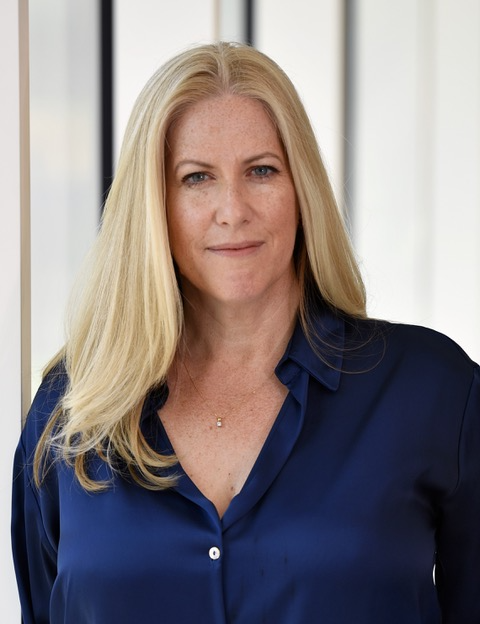
Jo Morris, Head of Insight at Novuna Business Finance comments: “The Government’s backing of AI has significant potential to drive economic growth across the UK – and our data shows there is a correlation between small business growth and AI adoption. For example, AI adoption is more prevalent among small businesses that are significantly growing this quarter (59%) than it is among those enterprises experiencing contraction (23%).
“That said, small businesses are not the same as large corporates, where the efficiencies of scale and the ability to invest in sophisticated tech infrastructure are more central to business planning. For many smaller enterprises across the UK, the personal – and human – touch is seen to be more important. Small business owners often know their customers personally and many are deeply rooted in the communities they serve. This is perhaps why so many survey respondents expressed caution towards AI, precisely because their enterprises were built on enduring human relationships and personal service.
“In truth, humans and AI need to co-exist, and in the early days of AI roll-out, striking the right balance is key. Our research also suggests there is an AI knowledge gap that needs to be addressed – with 29% of small business owners openly saying they were unsure how AI could be used in their business. So, as a new Government taskforce assesses how AI can deliver economic growth, it is important that small businesses are involved in the process, that their voices are heard, and that they have access to the knowledge and toolkits needed to make informed decisions about whether and how they can strike the right balance between embracing technological innovation and delivering the personalised service that remains central to their business.”
Reflecting on the research findings on the perceived value of human relationships, small business owner Pinky Laing, Founder of Remnant Revolution comments: “Many businesses are embracing AI to improve efficiency, but at Remnant Revolution we choose to invest in people. We believe sewing is about far more than making products; it’s about creating fairly paid, meaningful work, sharing skills and bringing people together. Technology can never replace the confidence and connection that comes from learning something new, the friendships formed around a sewing space or the pride of making something by hand. For us, the future is built on creativity, craftsmanship and real human connection.” Remnant Revolution is a small business that aims to build and empower women-led communities while championing sustainability by rescuing fabric from landfill to create unique homeware.