
- UK-developed ADAS package now included
- Interior comfort further enhanced
- New Skywell BE11 now priced from £31,990
- Available from January 2026
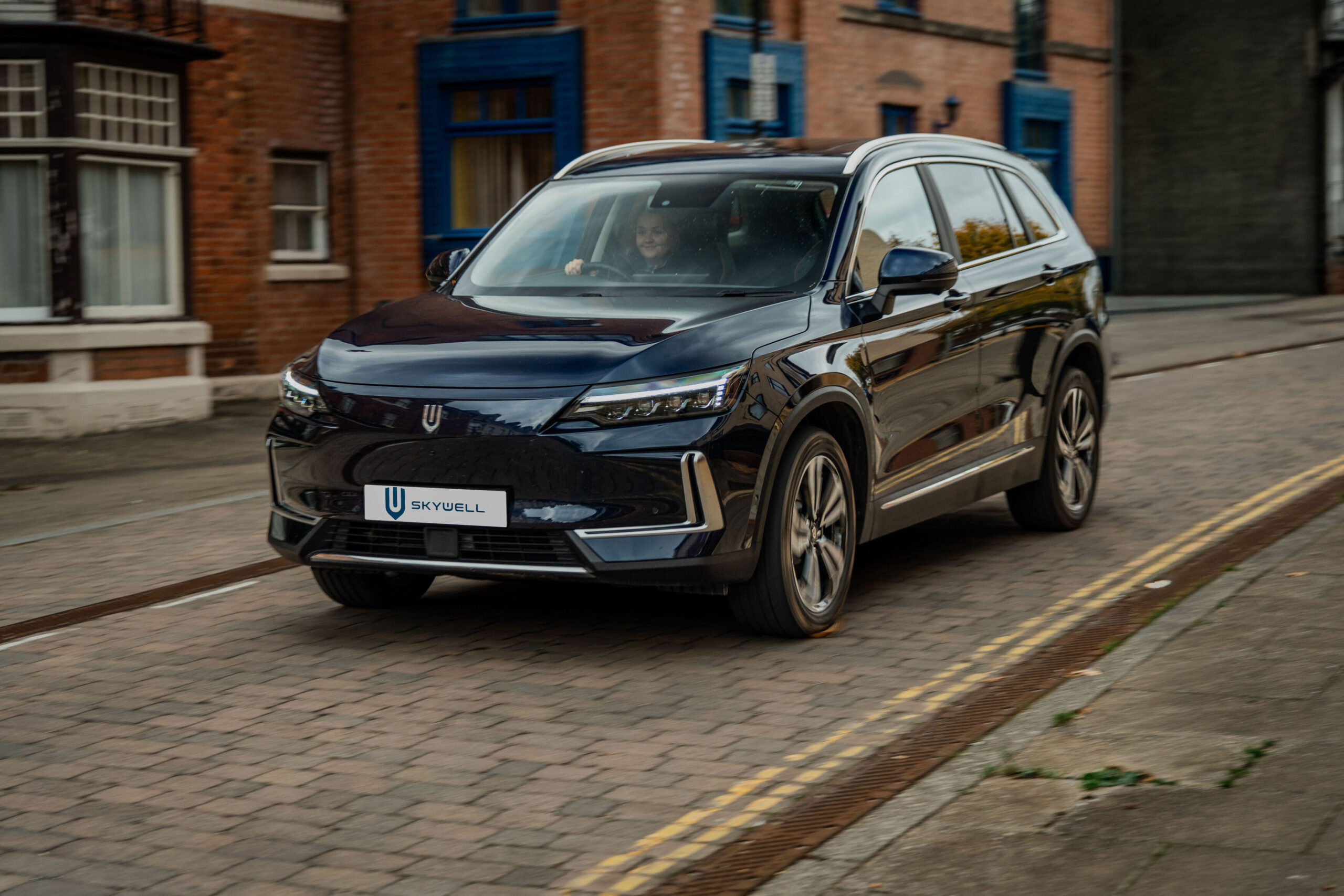
[5th January, Cirencester], Skywell today announces prices for the new BE11 2026 Model Year [BE11 26MY], a model that now benefits from significant technical upgrades, new tech features and improved driver comfort. Ordering is open now, with customer vehicle deliveries commencing in January.
Just 12 months on from its UK introduction, as the first in a new generation of battery electric vehicles to launch in the UK from Skywell, the BE11 has undergone a comprehensive revision for 2026.
Having listened to journalist and consumer feedback, the BE11 now includes a suite of customer-led enhancements, which introduces UK-developed ADAS equipment, improved driver comfort, and additional interior features, which now boasts even greater value for money.
Safety improvements
The enhanced BE11 26MY now adds:
- Adaptive Cruise Control (in lieu of Cruise Control)
- Automatic Emergency Braking
- Blind Spot Detection
- Drowsy Driver Alert Warning
- Forward Collision Warning System
- Intelligent Cruise Assist
- Lane Keep Assist
- Lane Departure Warning System
- Traffic Sign Recognition
- Steering wheel hands off detection
- Rear cross traffic alert
To ensure that the new safety features are best calibrated to UK roads – items such as lane keep assist, lane departure warning and blind spot detection, have been specifically developed in the UK, by Skywell’s engineering team, completing thousands of miles of on-road testing during development, across rural and urban scenarios, with varying terrain, road types and weather conditions.
With features such as overspeed reminder, driver fatigue reminder, front, side and curtain airbags, hill decent control and 360-degree around view monitor already standard safety features on BE11; the additions of the new equipment on the all-electric SUV, now bring the total number of safety features standard on the BE11 to over 25.
Enhanced comfort
Inside, the cabin of the BE11 also receives additional premium upgrades, including:
- Front seat heating and ventilation, with electric front seats, in a perforated black leather style and Alcantara finish,
- Driver’s seat electronic lumbar adjustment,
- Driver’s seat memory settings,
- Driver’s seat comfort entry/exit – allowing the driver to preset a position for the seat to automatically adjust to, when entering or exiting the vehicle.
Interior additions
The latest BE11 now adds:
- 128-colour ambient lighting across the dash (complimenting that already featured on front and rear doors),
- Cabin air particulate monitoring
- a revised UK & EU compatible 220v vehicle-to-load (V2L) 3-pin plug socket – removing the requirement for an adapter to power external equipment.
- Additional front mounted USB charging port (totalling two),
- USB-C charging port added to the rear (totalling two)
- An optional 15.6” infotainment screen (in lieu of 12.8” standard feature).
Exterior
Whilst the exterior design of the BE11 remains unchanged, the car now features ‘BE11’ tailgate badging. The existing four colour options also remain unchanged, with solid Aurora White joined by three metallic options – Polar Night Black, Midnight Blue and Galaxy Grey all available at no extra cost.
Battery & Powertrain
BE11 26MY remains available in two specifications, differing only by battery size. The BE11 Standard Range features a 72kWh NMC-battery (for a WLTP combined range of 248-miles); and BE11 Long Range, featuring a larger 86kWh NMC-battery (for a range of 303-miles, up to 401 miles on the urban test cycle). Both models are powered by a single 150kW (204Ps) BYD-sourced motor, powering the front wheels.
Models & Pricing
BE11 26MY will be available to order from 5th January with deliveries commencing in January, with pricing for the updated model now starting from £31,990 OTR.
Pricing for the updated BE11 range is as follows:
- BE11 150kW Standard Range 72kWh – From £31,990 (previously £36,995)
- BE11 150kW Long Range 86kWh – From £34,990 (previously £39,995)
The new BE11’s pricing strategy firmly puts it, between £3,500-£14,000 less than similarly sized C-segment eSUVs*, and even better value than many smaller hybrid models**.
Great value
Skywell’s leading 7-year / 100,000-mile manufacturer warranty carries over, along with the existing 8-year / 155,000-mile battery warranty, with roadside assistance offered free of charge for up to 10 years, available when customers return to a Skywell Dealer for their annual servicing.
The BE11 already represented fantastic value for money, with the single derivative model benefitting from a long list of standard items including: automatic park assist, 360 Around View Monitor with front and rear parking sensors, a full-length opening panoramic Skyroof, reclining rear seats, motion-sense tailgate opening, keyless entry/exit, wireless smartphone charging and connectivity; whilst undercutting similarly sized vehicles.
The new BE11 represents a collaboration between Skywell’s teams in the UK and China, swiftly addressing feedback received on the launch model. With more than 20 additional product features engineered into the new BE11 26MY, and a new exceptionally competitive price point; we strengthen the BE11’s core principals – offering space, range, and comfort within an incredible value package.
David Clark, Skywell UK General Manager
* MRRP reference of comparable size E-SUVs: Geely EX5 60kWh SE (from £31,990) Renault Scenic 65kWh Techno (from £35,495); Vauxhall Grandland Electric Design (from £36,055); Torres EVX 73kWh K30 (from £36,995); MG S6 77kWh SE Long Range (from £37,995); Nissan Ariya 63kWh Advance (from £39,000); Skoda Enyaq 60 SE L (from £39,010), Changan Deepal S07 80kWh (from £39,990); Peugeot e-3008 73kWh Allure (from £46,000) – manufacturer recommended on-the-road prices correct as of 3rd December 2025.
** MRRP price reference vs. smaller vehicles: Kia EV3 58kWh Air (from £33,005) Omoda E5 61kWh Knight (from £33,065); Alfa Romeo Junior 54kWh Elettrica (from £33,905); Peugeot e-2008 (from £35,400); Hyundai Tucson 1.6T Hybrid Advance (from £36,245); – manufacturer recommended on-the-road prices correct as of 3rd December 2025.