
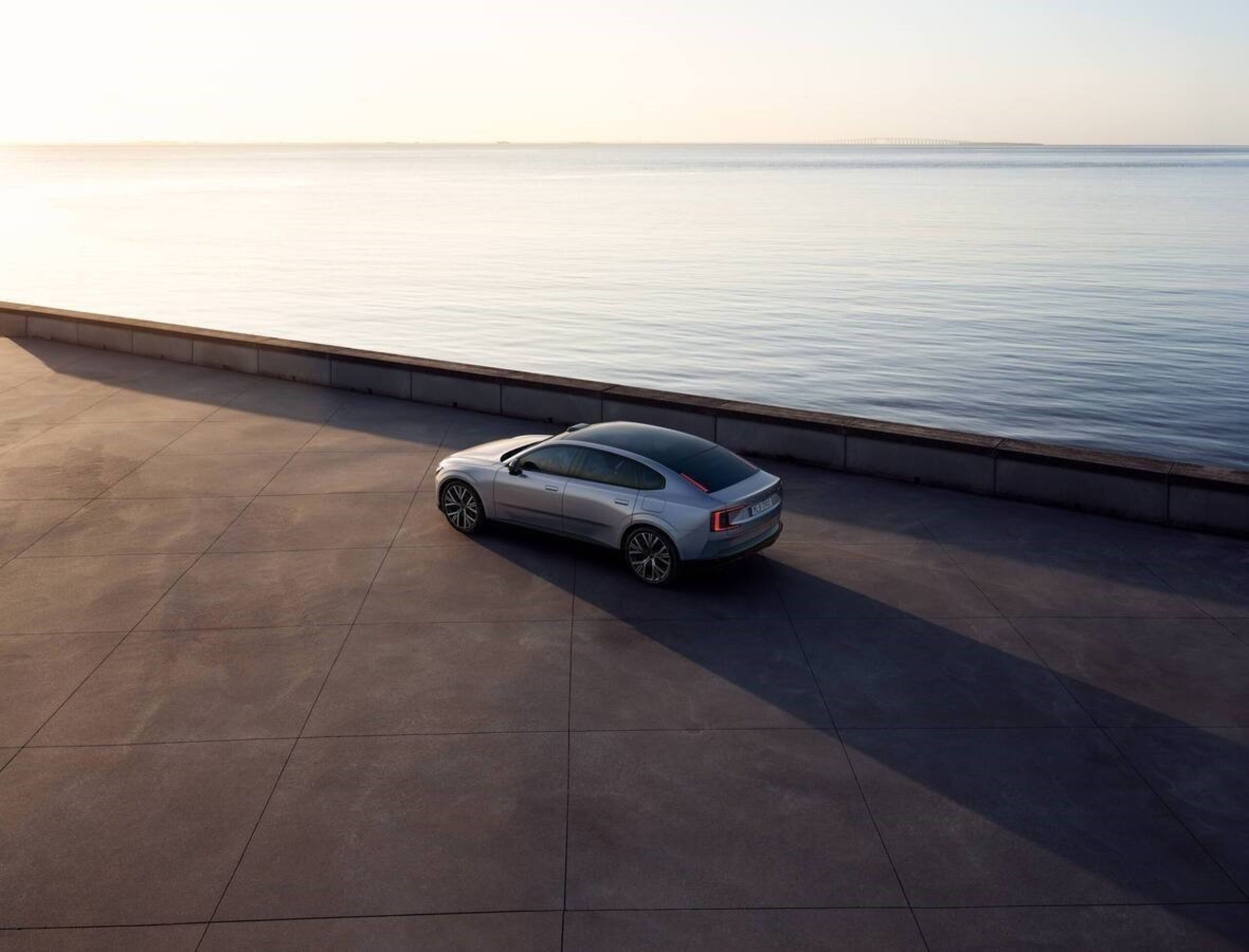
With the new and fully electric ES90, which starts production later this summer and is produced with climate-neutral energy, Volvo Cars launches a car designed with sustainability in mind. This is reflected by the new Life Cycle Assessment (LCA) report for the ES90, which describes which materials and processes contribute to the car’s carbon footprint over its life cycle.
The total carbon footprint of the ES90 is 31 tonnes when using a European energy mix to charge it. When using wind energy to charge the ES90, that figure falls to 26 tonnes. With a European energy mix, the ES90’s footprint is approximately 50 per cent lower than the Volvo S90 mild hybrid variant, and 30 per cent lower than a plug-in hybrid S90. It is also lower than the EX40 and EC40.
This means the ES90 has one of the lowest carbon footprints of any Volvo car to date. It also demonstrates that fully electric cars are a good choice both for customers and for the climate.
The third-party verified LCA report identifies the key contributing materials and processes to the car’s carbon footprint. Focused on greenhouse gas emissions, the report covers the car’s life cycle, starting with the extraction and refining of raw materials and ending with the car’s end-of-life.
“We go above and beyond existing legislation and have clear ambitions because that is important to us,” says Vanessa Butani, head of global sustainability at Volvo Cars. “We aim to achieve net-zero greenhouse gas emissions by 2040, and our ambition to be a leader in electrification is one step in that direction. The ES90 represents our holistic approach to sustainability, including the circular economy, climate-neutral manufacturing and responsible business.”
A holistic approach beyond what is required
When it launched its first fully electric car in 2019, Volvo Cars was the first car maker that pledged to release LCA reports for all its global fully electric models. By publicly issuing the reports, the company aims to help customers make informed decisions when choosing their next electric car. It has since issued LCA reports for five models: the Volvo EX40, EC40, EX30, EX90 and now the ES90.
In addition to being a fully electric car with zero tailpipe emissions, the ES90 has been designed with a holistic approach towards sustainability. For example, it is the first Volvo car equipped with the company’s new 800-volt electric system. This creates benefits in terms of charging and energy efficiency, thanks to lighter components that reduce the car’s overall weight. The car’s design also helps to improve efficiency and delivers a drag coefficient of 0.25, the best in Volvo Cars history.
The ES90 is built with approximately 29 per cent recycled aluminium, 18 per cent recycled steel, as well as 16 per cent recycled polymers and bio-based materials such as real, FSC-certified wood in the cabin. Inside, customers can pick a Nordico upholstery option made from recycled material such as PET bottles and bio-attributed material. The ES90 also comes with Volvo Cars’ world-first battery passport, based on blockchain technology that allows the company to track the origin of raw materials and the overall health of the battery.
The first customer-bound ES90 will roll off the production line this summer. It is available for order now in Austria, Belgium, the Czech Republic, Finland, France, Germany, Greece, Hungary, Italy, the Netherlands, Norway, Poland, Portugal, Spain, Sweden, Switzerland and the United Kingdom, with other markets added later this year and in 2026. For more details, check the Volvo Cars webpage.
Volvo Cars in 2024
For the full year 2024, Volvo Car Group recorded a record-breaking core operating profit of SEK 27 billion. Revenue in 2024 amounted to an all-time high of SEK 400.2 billion, while global sales reached a record 763,389 cars.
About Volvo Car Group
Volvo Cars was founded in 1927. Today, it is one of the most well-known and respected car brands in the world with sales to customers in more than 100 countries. Volvo Cars is listed on the Nasdaq Stockholm exchange, where it is traded under the ticker “VOLCAR B”.
“For life. To give people the freedom to move in a personal, sustainable and safe way.” This purpose is reflected in Volvo Cars’ ambition to become a fully electric car maker and in its commitment to an ongoing reduction of its carbon footprint, with the ambition to achieve net-zero greenhouse gas emissions by 2040.
As of December 2024, Volvo Cars employed approximately 42,600 full-time employees. Volvo Cars’ head office, product development, marketing and administration functions are mainly located in Gothenburg, Sweden. Volvo Cars’ production plants are located in Gothenburg, Ghent (Belgium), South Carolina (US), Chengdu, Daqing and Taizhou (China). The company also has R&D and design centres in Gothenburg and Shanghai (China).