
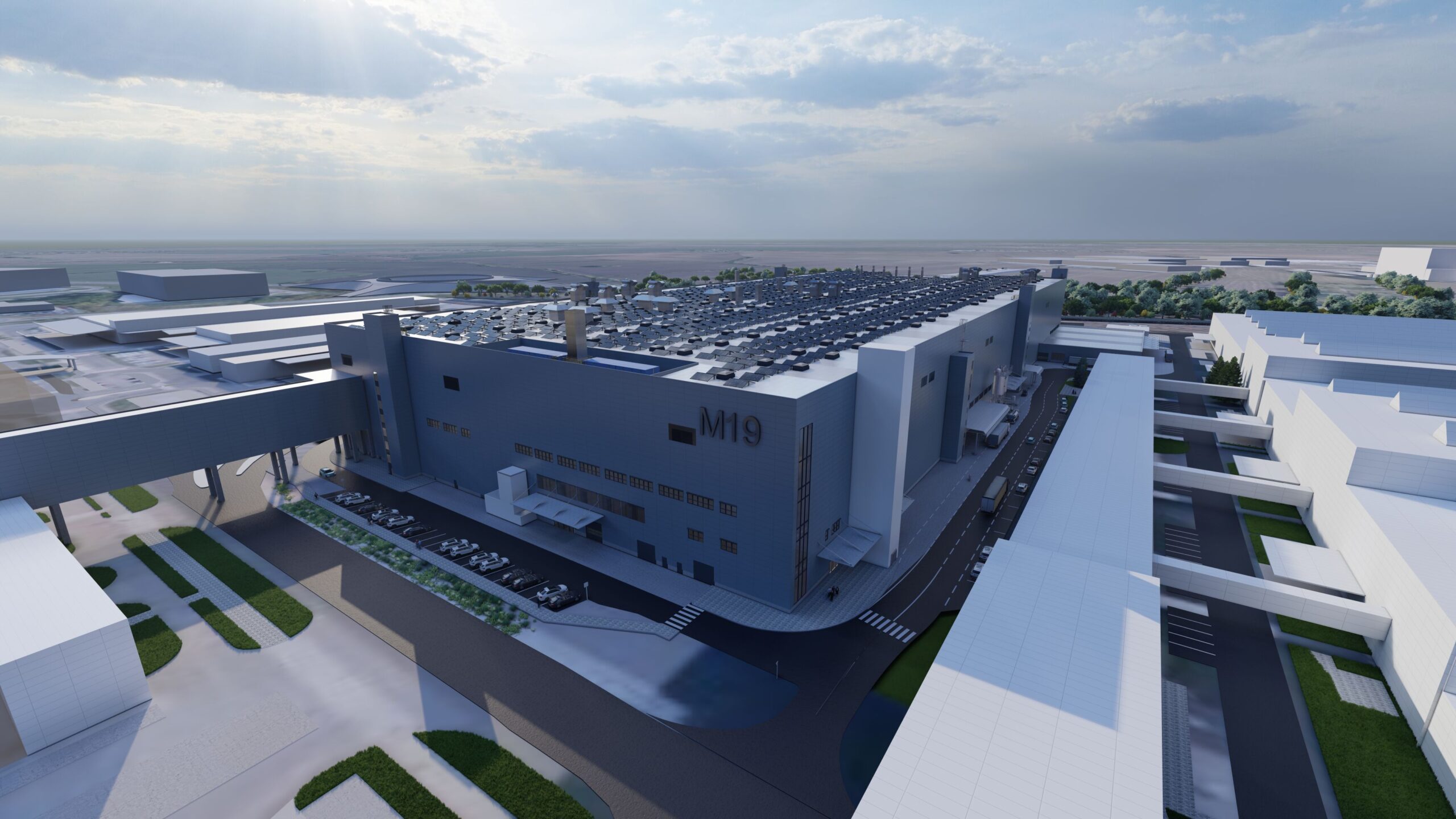
- Operations to begin in 2029: The new paint shop will have a capacity of up to 1,600 units per day
- Advanced technology: High automation, precise coating application, innovative paint types, and improved environmental compatibility
- Greater flexibility and efficiency: Capacity to paint vehicles on both ICE and electric platforms will streamline production processes at the Mladá Boleslav plant
- Sustainability: The more environmentally friendly facility will save 28% CO₂ annually compared to the paint shop it replaces, which is in operation since 1996
Mladá Boleslav, 26 June 2025 – Škoda Auto has taken another significant step toward future-proofing its main plant in Mladá Boleslav by laying the foundation stone for an advanced paint shop. Scheduled to open in 2029, the facility will have a daily capacity of up to 1,600 units. Combined with existing facilities, the total daily painting capacity at the Mladá Boleslav plant will reach 2,600 units. The state-of-the-art facility will utilise automation, robotics, and advanced technologies to enhance the quality of each protective coating applied. Capable of painting vehicles built on both internal combustion (ICE) and electric platforms, the facility will significantly enhance operational efficiency and flexibility. It will also enable two-tone paint applications and matte finishes. Crucially, the new paint shop aligns with Škoda Auto’s aim to achieve carbon-neutral production at its Czech plants by 2030. Alongside a reduction in volatile organic compounds (VOCs), CO₂ emissions from painting processes will be cut by 28%.
Andreas Dick, Škoda Auto Board Member for Production and Logistics, commented: “The construction of a new paint shop at our main plant in Mladá Boleslav underscores our commitment to both the Czech Republic, the home of Škoda Auto, and the company’s ongoing development. The facility’s extensive use of cutting-edge technologies, such as robotic systems for PVC-based sealant application and automated systems for plugging body openings, will significantly boost efficiency. It will also set new environmental standards as one of the Volkswagen Group’s most advanced paint shops, substantially reducing VOC and CO₂ emissions by 28%.”
Optimal conditions for advanced body treatment at Škoda’s main plant
The Mladá Boleslav site currently has two paint shops, with the original facility operating since 1996. This older facility will be fully replaced by the new paint shop, which offers additional capabilities such as contrasting roof colours and matte finishes. The second paint shop began operations in 2019. Together with the new facility, Škoda Auto’s main plant will provide optimal conditions for advanced body surface treatments.
Highlighting the scale of the project, the new building will measure 301 metres in length, 131 metres in width, and 32.5 metres in height, comparable to a seven-storey structure. The total floor area will span 118,000 square metres – equivalent to over 16 football fields – and the conveyor system will extend to 15 kilometres. The facility will be built on the current site of a finished-vehicle car park, adjacent to the recently opened Laurin & Klement bridge.
Painting is among the most important stages of vehicle production, as it provides long-term aesthetic quality and all-round protection against external factors. The body surface protection process includes multiple layers: a cataphoretic anti-corrosion coating, PVC application in vulnerable areas, followed by precoat and base coat paints applied using a wet-on-wet process. For the first time, Škoda will employ a process that applies the decorative basecoat directly onto the cataphoretic layer without baking the primer coat, optimising cost efficiency without compromising quality. The final clear coat and cavity waxing complete the process, resulting in a total coating thickness of approximately 100 micrometres (0.1 mm).
Cutting-edge paint technology: flexible, precise, economical, sustainable
The new paint shop at Škoda Auto’s Mladá Boleslav plant will greatly increase operational flexibility by accommodating both ICE and electric models on the same production line. It will feature a new curing oven, optimised for precise curing of coatings throughout the painting process. A combined energy source, using biogas and electricity will boost flexibility, reduce emissions, and lower costs.
Moreover, the new paint shop will set benchmarks for environmental compatibility: VOC emissions will decrease by over 14 grams per square metre, and overall CO₂ emissions will be reduced by 28%, contributing substantially to Škoda Auto’s carbon-neutral production goal by 2030.