
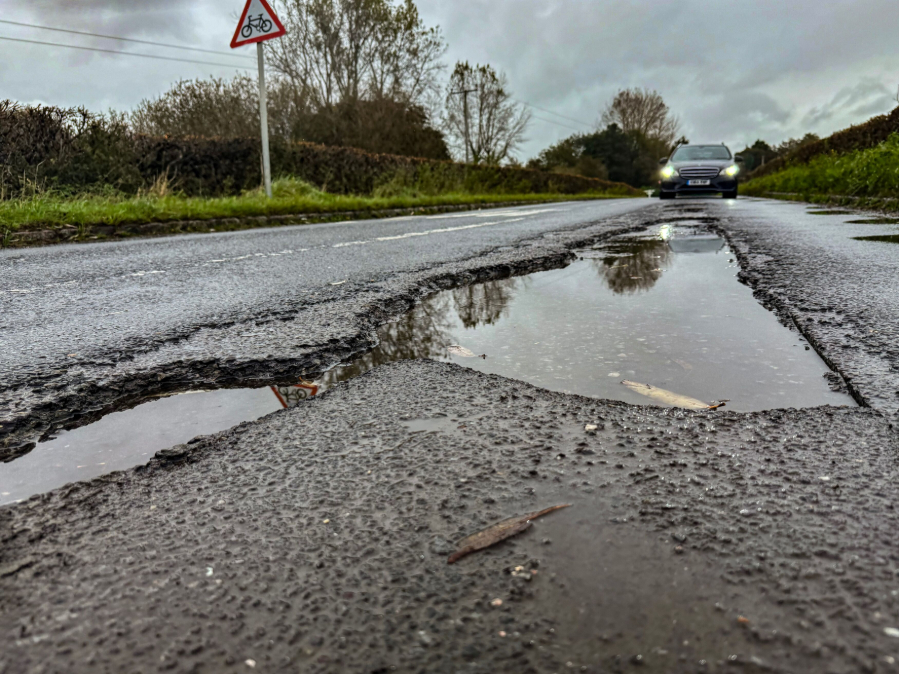
Despite increased funding, majority of drivers don’t expect to see road improvements in near future
With pothole damage to vehicles on the increase, millions of the nation’s drivers believe road repair funding should come from specific groups of vehicles.
Research published today by Kwik Fit, which tracks the annual cost of damage to the nation’s vehicles from pothole impact, found that the majority of drivers think operators of heavy goods vehicles should make a bigger contribution to repairs. The company’s research found that 56% of drivers say that HGV operators should pay an additional levy which is ringfenced for road surface repairs. In contrast, just 17% disagree.1
The leading automotive servicing and repair company found that many drivers also believe that there should be an additional ring-fenced levy placed on delivery vans. 44% are in favour of such a measure, compared to 23% who are against it.
A greater proportion believe that the weight of a car should be a factor in setting ‘road tax’. Nearly half (48%) of drivers told Kwik Fit’s researchers that the owners of heavier cars should pay a higher rate of ‘road tax’ (vehicle excise duty) to reflect their greater impact on the roads, with one in five (21%) against.
Kwik Fit published its PIT Report (Pothole Impact Tracker) 2025 earlier this year. This revealed that over the last year, the country’s drivers paid £1.7bn to repair vehicle damage caused by potholes. As well as being financially damaging, this new data shows that the vast majority of drivers believe the condition of our roads reflects poorly on the nation. 77% of drivers say that the number of potholes on UK roads is an embarrassment for one of the world’s leading economies.
The government has clearly recognised the impact potholes are having and recently announced new measures to tackle them. However, many drivers remain sceptical of the difference this will make. Despite the additional funding from the government, 64% of drivers say they don’t expect to see an improvement in the condition of roads in their local area in the near future.
It’s clear from the research that most motorists feel they are already personally paying enough to support the country’s road maintenance programme. In contrast to a levy on HGVs or vans, only a quarter (26%) of drivers would be prepared to pay more ‘road tax’ which would be ringfenced for road repairs in their local area. Interestingly, younger drivers would be much more willing to do so than older drivers. Two fifths of Gen Z (40%) and Millennials (38%) would be prepared to pay an additional local road tax, compared to just 18% of Generation X and 15% of Boomers.
This year’s ALARM Report from the Asphalt Industry Alliance revealed that local authorities estimate that it would take £16.8bn to tackle the backlog of road repairs.2 This figure has increased 42% since 2016, while over the same period Kwik Fit’s tracker has shown that the cost to drivers has risen by 150%.3
Dan Joyce, operations director at Kwik Fit, said: “The data shows that there is an increasingly pressing need to invest in the maintenance of our road network, but our new research highlights that there are no easy answers as to how this is funded. Motorists already feel that they are contributing enough so it is understandable that they want the additional burden to be on the heavier vehicles believed to do the most damage to road surfaces.
“Of course, any costs placed on businesses through levies on HGVs or delivery vans are likely to be passed through to the end consumer, so it’s critical that potential measures are not looked at in isolation. And however the required funding is raised, what is vital is for there to be a long term strategic plan for road maintenance rather than short term patching.”
Any driver who has hit a pothole and suspects they may have suffered damage but is unsure what to look for can take their car to any of Kwik Fit’s 600 plus centres across the UK where the company’s expert technicians will carry out a free check for damage.
More information can be found here and for the latest news and updates from Kwik Fit, customers can also follow the company on X/Twitter at @kwik_fit.