
A tribute to the brand’s legacy, starring iconic masterpieces from its past and the current range,
to mark out another stage in the celebrations of the Year of the Trident
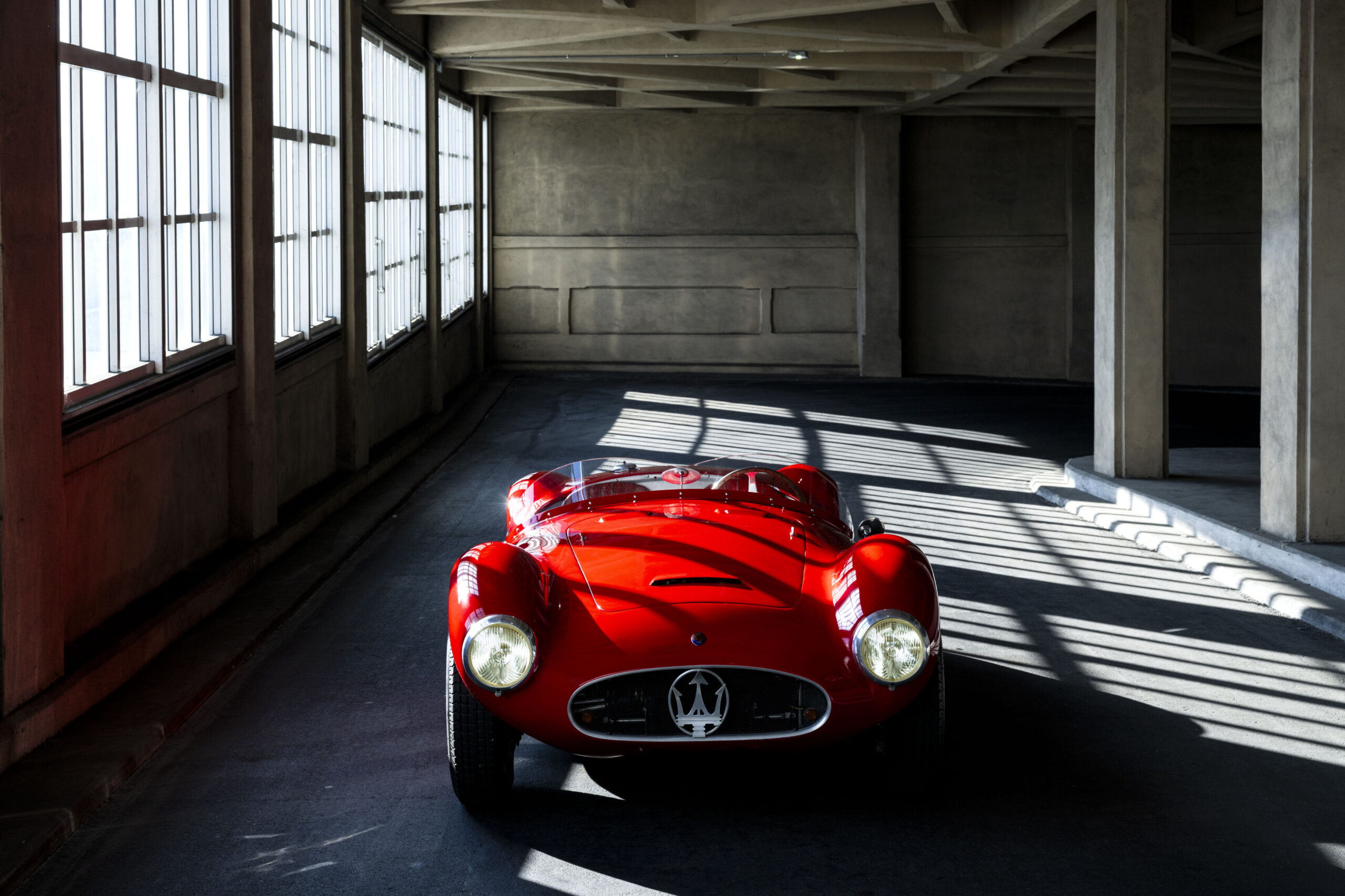
Modena, 12 June 2025 – The 43rd historical re-enactment of the 1000 Miglia –the renowned regularity race for classic cars that either competed in the original speed race or were produced during the same period (1927-1957) – has begun. Maserati is taking to the famed roads of the 2025 event, taking part with a classic car – a Maserati A6 GCS/53 – and is grasping the opportunity to mark out another stage in the celebrations of the Year of Trident.
The standouts among the Support Cars at the event include a GranCabrio 490, a GranTurismo Trofeo and a Grecale Trofeo, embellished with special liveries to pay homage to the anniversary of the Maserati logo, designed 100 years ago and the symbol of Maserati’s excellence around the world.
A journey that, within just under a year, will take the brand into the celebrations of a century in racing: in 1926, the Maserati Tipo 26 – the first car in history to bear the Trident logo on the bonnet – took part and won its class at the Targa Florio, with Alfieri Maserati at the wheel.
The remarkable “museum in motion” will once again kick off from Brescia on 17 June and return on Saturday 21st following stops in some of Italy’s most picturesque towns. Long regarded as part race and part adventure, this year’s 1000 Miglia will feature over 400 priceless classic cars from 29 countries, travelling along a 1,900-km itinerary that unfolds according to a “figure-of-eight” route inspired by the first 12 editions of the 1000 Miglia speed race.
Among the rarities taking part is a Maserati A6 GCS, owned by a private collector. It is believed to be the Maserati that took part in the 1000 Miglia speed race more than any other car – including the final one in 1957 – and was once driven by champions such as Luigi Musso. Now, 70 years since its debut, the A6 GCS/53 is back and ready to take on the roads of the Freccia Rossa once again –not merely for the sake of nostalgia, but to deliver thrills and excitement in true Trident fashion. The model is currently undergoing the Certification of Authenticity process at Maserati Classiche, the Trident’s official programme dedicated to safeguarding and upholding the brand’s historic legacy. Through a meticulous technical and historical verification process, the service provides collectors with a prestigious certification that attests to its excellence and authenticity.
As well as the magnificent A6 GCS/53, the Maserati brand will also be playing a leading role throughout the re-enactment route, with three support cars from its current range – a GranCabrio 490, a GranTurismo Trofeo and a Grecale Trofeo – which embody the brand’s racing DNA and contemporary elegance. Each model will feature an exclusive livery, to celebrate the evolution of the Maserati logo as a visual symbol over the last century.
As part of this commemorative atmosphere, the 1000 Miglia will also serve as a showcase for innovation thanks to a collaboration between Maserati and the Politecnico di Milano. After travelling more than 300 km in autonomous mode in 2024, the GranCabrio Folgore developed by the Artificial Intelligence Driving Autonomous (AIDA) group is back in competition, to begin a new chapter in the group’s research into the electric, autonomous and shared mobility of the future, by taking part in this year’s 1000 Miglia Green.
Maserati A6 GCS/53 (1953)
Maserati is rewritings the script for the 1000 Miglia by bringing to it a car that has already made its mark on the race: the A6 GCS/53 with chassis no. 2043 – the very same model that took part in the last edition of the race in 1957. A comeback that unites passion and memories, Maserati Classiche will provide official support to the crew throughout the competition. The model belongs to the private collection of a Maserati enthusiast and connoisseur, and took part in five consecutive editions of the 1000 Miglia speed race from 1953 to 1957 – n all likelihood making it the Maserati with the highest number of appearances in the most iconic of historic motorsport races. Currently undergoing the Certification of Authenticity process at Maserati Classiche, the vehicle is distinguished by one of the longest competitive careers of its time and a roster of highly skilled drivers, including the world-famous Luigi Musso. The Maserati A6 GCS/53, also known as the Sport 2000, was created to take the Trident back to top of the Sport 2-litre category. From early 1953, the vehicle established itself as one of the most sought-after cars among up-and-coming Italian and foreign talents, with 53 models constructed in two years. The A6 GCS/53 achieved its first significant success at the 1000 Miglia, when Emilio Giletti came in sixth place overall and first in the Sport 2-litre category. Despite it never having won the competition outright, it carved out a special place in the hearts of fans. Its state-of-the-art design choices set it apart from a technical point of view: its short-stroke, twin-ignition “Superquadro” engine, twin overhead camshafts, and geartrain guaranteed it higher rotational speeds.
The Maserati Classiche programme
Through the activities of the Maserati Classiche programme, the department at the House of the Trident safeguards and upholds the preservation and originality of its automotive heritage with an exclusive assistance service dedicated to the brand’s customers and collectors – including issuing a Certificate of Authenticity. The Certification process – overseen by a committee of experts – applies to Maserati cars over 20 years old and special series, including those from the recent past such as the MC12 or the limited-edition Quattroporte. The programme also accommodates vehicle maintenance requests and offers an on-demand, in-house Car Detailing service. At the service of collectors and customers, the programme provides comprehensive support for vehicle conservation and the restoration of original details. A dedicated assistance plan is available for Classic, Youngtimer, and Special car owners, covering both routine maintenance and restoration operations. One of Maserati Classiche’s core responsibilities is the reproduction of spare parts no longer available on the market. This takes place in full respect for the original design specifications, making use of the best available technologies and enhancing the reliability and functionality of the parts without altering their aesthetic integrity.
Maserati S.p.A.
Maserati produces a complete range of unique cars, immediately recognizable for their extraordinary personality. Thanks to their style, technology, and innately exclusive character, they delight the most discerning, demanding tastes and have always been a benchmark for the global automotive industry. A tradition of successful cars, each of them redefining what makes an Italian sports car in terms of design, performance, comfort, elegance, and safety, currently available in more than 70 markets internationally.
Maserati line-up includes the Grecale, the “everyday exceptional” SUV, the GranTurismo, the iconic Italian grand tourer, and the GranCabrio, the new convertible of the Trident; all models characterized by the use of the highest quality materials and excellent technical solutions. A range equipped with 4-cylinder hybrid powertrains – available for Grecale – and V6 petrol, with rear-wheel and four-wheel drive, embodying the performance DNA of the Trident brand. The top of the range is made up of the MC20 super sports car and the MC20 Cielo spyder, powered by the ground-breaking 100% Maserati Nettuno V6 engine, which incorporates F1-derived technologies into the power unit of a standard production car for the first time. The GranTurismo is available with both the high-performance V6 petrol engine, derived from the Nettuno, and a 100% electric version: the GranTurismo Folgore, the first car in the Modena-based brand’s history to adopt this solution. The full-electric range also currently includes the Grecale Folgore, Maserati’s first 100% electric SUV, and the GranCabrio Folgore. Finally, the House of the Trident’s latest addition is the Maserati GT2 Stradale, the road-legal version of the GT2 that took Maserati back to the track in closed-wheel championships. The heart of the new super sports car is the V6 Nettuno engine, reaching 640 hp (471 kW) in the latter configuration. The GT2 Stradale is therefore the most powerful road-going Maserati with an internal combustion engine.
The mission at Maserati is to write the future of mobility in the luxury segment, focusing on its customers’ requests. The Brand, in line with the Stellantis “Dare Forward 2030” strategic plan, is now taking Italian luxury all over the world.