• Data from HonestJohn.co.uk reveals the UK’s most efficient cars
  • Japanese brands are the fuel economy stars
  • Over a quarter of a million drivers share their real-world MPG numbers
  • Suzuki leads petrol car numbers, Toyota is star hybrid brand and Nissan leads diesel mpg

Unless you drive a fully electric car, stopping at filling stations to buy fuel is one of motoring’s unavoidable costs – but thanks to HonestJohn.co.uk’s Real MPG data, you can make a more informed choice about which model is best for you when it comes to keeping your fuel costs down. 

HonestJohn.co.uk’s Real MPG figures are compiled from information supplied by over 250,000 of the sites readers, split across different models from the whole spectrum of makes, models, sizes, ages and prices. The higher the number achieved, the lower those fuel bill. 

Based on the latest Real MPG results it’s clear that cars from ToyotaSuzuki and Nissan are proving to be among the most economical on Britain’s roads.

Smaller, lighter cars tend to provide the best MPG figures but that doesn’t mean you’ll need to crowbar yourself in a city-centric model to benefit. HonestJohn.co.uk’s  analysis confirms that many family cars will deliver impressive fuel efficiency in excess of 50mpg, while the very best in our lists below all beat 70mpg.

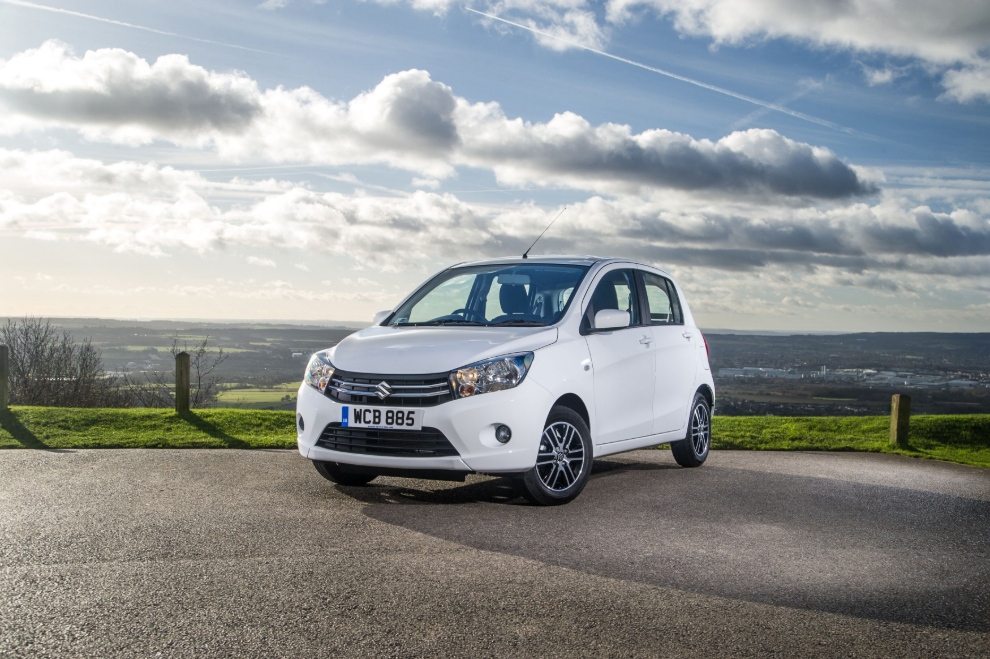
Petrol cars are by far the most prevalent on British roads at the moment, and Japanese maker Suzuki took the top three Real MPG places for petrol models. The 2015-19 Celerio 1.0 DualJet city car came out on top with a score of 70.1mpg, with the 2016-19 Baleno DualJet in second place at 63.5mpg. Third place went to the 2017-24 Swift 1.0 BoosterJet Hybrid.

The best-performing diesel car was the 2017-2022 Nissan Micra dCi 90, which achieved 69.6mpg in Real MPG scoring, followed by the SEAT Ibiza 1.4 TDI Ecomotive with 66.5mpg. In third place was the 2012-2025 Fiat Panda 1.3 MultiJet, with 66.4mpg overall.

Topping the charts for hybrid cars was Toyota, with the 2021 Yaris Cross 1.5 VVT-i Hybrid achieving a Real MPG figure of 70.5mpg. The 2020-on Yaris Hybrid was a close second at 69.6mpg, with the Suzuki Swace (2021-25) in third place at 65.5mpg.

Getting real-world figures for plug-in hybrid models is more complex, as their fuel economy performance is subjective to how the cars are used, but Real MPG data comes from real-world use, so is from authentic users. The top performing plug-in hybrid among HonestJohn.co.uk readers was the 2017-22 Toyota Prius 1.8 VVT-i Plug-in, with a Real MPG figure of 133.5mpg.

The Hyundai Ioniq 1.6 GDI Plug-in Hybrid came in second, with 129.5mpg, followed by the 2014-2020 Audi A3 Sportback 1.4 TFSi e-tron, which achieved 107.3mpg. 

David Ross, HonestJohn.co.uk Senior Editor, said: “Vehicle manufacturers use a standard process to arrive at MPG figures, known as the Worldwide Harmonised Light Vehicle Testing Procedure, or WLTP. While it is said to closely replicate real-world usage, it’s only in daily use when you can truly assess how economical a car really is, and the Real MPG data has shown us some clear differences between WLTP figures and those achieved by HonestJohn.co.uk readers. One thing is certain, though, and it’s that Japanese brands came out on top for Real MPG performance”. 

Although electric cars are growing in number, the range data isn’t yet broad enough to provide a fair comparison. However, HonestJohn.co.uk will launch Real Range soon, based on data gathered from the site’s electric car owners.

A full breakdown of the Real MPG data can be found herehttps://www.honestjohn.co.uk/guides/best-mpg-cars/

By admin

Leave a Reply

Your email address will not be published. Required fields are marked *

You missed

South West homeowners face seven-day waits for urgent repairs as tradie shortages continue to bite Fix Radio analysis shows the South West is among the slowest regions for urgent fixes, while Plymouth records one of the longest city-level waits in the UK The South West records an average 7-day wait for an urgent tradie fix. Plymouth records one of the longest city-level waits in the dataset, at 10 days. Across the 17 cities surveyed, the average wait for an urgent fix is just over 6 days. CITB says the UK construction industry needs to recruit the equivalent of 239,300 extra workers between 2025 and 2029. Analysis from Fix Radio shows that homeowners in the South West are facing an average seven-day wait for an urgent tradesperson fix, placing the region among the slower parts of the UK for repair response times. Based on Fix Radio’s analysis of city-level urgent repair wait-time data from Markel Direct’s Censuswide survey of UK homeowners, the findings point to continued pressure on trades capacity, local demand and labour availability across the region. The national picture remains highly uneven. The East of England records the shortest average wait at three days, followed by the North East on four days, the North West on 4.5 days and London on five. Wales and the South East each average six days, Yorkshire and the Humber sits at 6.5, while the South West, West Midlands, Scotland and Northern Ireland all come in at seven days. At the other end of the scale, the East Midlands records the longest average delay at nine days, leaving a six-day gap between the fastest and slowest regional averages in the dataset. The research also found that 44% of homeowners have already delayed repairs because of the cost of hiring a tradesperson, while city-level data shows waits stretching as high as 10 days in Plymouth for urgent issues. That makes the South West one of the clearest examples of how regional pressure can build when local demand, household repair needs and labour constraints begin to overlap. Set against a construction workforce already under strain, the figures point to a region where availability remains a growing issue for both customers and tradespeople. CITB forecasts that the industry will need to recruit the equivalent of 239,300 extra workers between 2025 and 2029, with the UK construction workforce expected to reach around 2.75 million by 2029. From Fix Radio’s perspective, the findings reflect a wider story around availability, local demand and the challenge of keeping enough skilled people in the pipeline. Waiting times are not only a sign of homeowner frustration. They also show where order books are full, where capacity is tight and where the wider conversation around skills and recruitment is becoming harder to ignore. In the South West, where regional averages are already above the national benchmark and Plymouth stands out as one of the slowest locations in the dataset, that pressure is becoming increasingly visible. About Fix Radio Fix Radio, the Builders Station is the home of entertainment, music and information for UK tradespeople. Since 2017 the station has been built from the ground-up with tradespeople in mind, providing a mixture of authentic trade voices, up-beat music and a schedule designed around the tradesperson’s day. The station’s schedule includes some of the biggest talent in the industry, including social media influencers the Bald Builders, Clive Holland of the BBC and formerly Cowboy Trap, the country’s most famous plasterer Chris Frediani from DIY SOS, plumbing influencers Andy Cam and Todd Glister, decorators Joel Bardall and Todd Von Joel, electrician turned YouTuber Thomas Nagy, Roofer of the Year Danny Madden, carpenter, craftsman and social media influencer Robin Clevett. Broadcasting nationally on DAB since May 2022, Fix Radio has an average reach of 833,545 tradespeople each week. The Builders Station also boasts 27.9 average weekly listening hours. Fix Radio’s audience reach and listening hours are audited by Nielsen.