
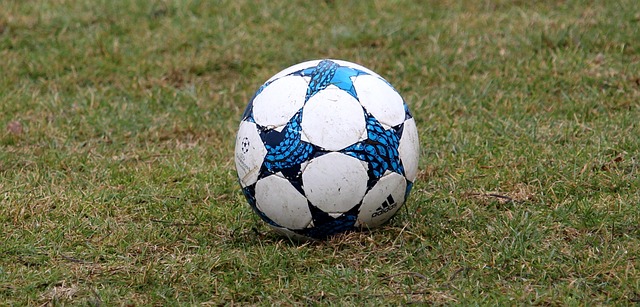
The UEFA Champions League Final is one of the most prestigious events in club football, attracting millions of viewers worldwide. Its history is rich with memorable moments, legendary players, and iconic matches. From its humble beginnings to its current status as the pinnacle of European club football, the Champions League Final has evolved significantly over the decades.
Origins: The European Cup Era (1955-1992)
The UEFA Champions League began as the European Champion Clubs’ Cup, commonly known as the European Cup, in the 1955-1956 season. The competition was initiated by the French sports newspaper L’Équipe, and it featured the champions of various European domestic leagues. The first final was held on June 13, 1956, at the Parc des Princes in Paris, where Real Madrid defeated Stade de Reims 4-3 to become the inaugural champions.
Real Madrid dominated the early years of the competition, winning the first five editions from 1956 to 1960. This era established the club as a powerhouse in European football and set the stage for the competition’s future growth.
The Rise of Competition (1960s-1980s)
The 1960s and 1970s saw a diversification in the list of champions. Clubs like Benfica, Inter Milan, and Manchester United emerged victorious, with Celtic becoming the first British club to win the title in 1967. This period also saw the introduction of some of the most iconic finals in history.
In 1967, Celtic defeated Inter Milan 2-1 in Lisbon, and in 1968, Manchester United triumphed over Benfica 4-1 at Wembley Stadium, marking a significant milestone for English football. The 1970s were dominated by Dutch and German clubs, with Ajax and Bayern Munich each securing three consecutive titles.
The 1980s witnessed the rise of English clubs, with Nottingham Forest and Liverpool achieving significant success. Liverpool’s victory in 1984, their fourth European Cup title, was particularly memorable as they defeated AS Roma in Rome via a dramatic penalty shootout.
Transformation: The Birth of the Champions League (1992-Present)
The 1992-1993 season marked a significant transformation with the rebranding of the competition as the UEFA Champions League. This change brought a new format, including a group stage and expanded participation, allowing non-champions from top leagues to compete.
The first Champions League final, held in 1993, saw Olympique de Marseille defeat AC Milan 1-0, making Marseille the first French club to win the title. The new format increased the competition’s global appeal and commercial success.
Modern Era: Dominance and Drama (2000s-Present)
The 2000s have seen the emergence of new powerhouses and unforgettable matches. Real Madrid continued their legacy with a remarkable run in the 2010s, winning four titles in five years (2014, 2016, 2017, 2018). FC Barcelona, under the guidance of players like Lionel Messi, Xavi, and Andrés Iniesta, also enjoyed tremendous success, winning titles in 2006, 2009, 2011, and 2015.
One of the most dramatic finals occurred in 2005, known as the “Miracle of Istanbul,” where Liverpool came back from a 3-0 deficit at halftime to draw 3-3 with AC Milan and eventually win on penalties. Similarly, the 1999 final saw Manchester United score two stoppage-time goals to defeat Bayern Munich 2-1, securing a historic treble.
Cultural Impact and Legacy
The UEFA Champions League Final is not just a football match; it is a global spectacle. The competition has contributed significantly to the globalization of football, bringing together fans from diverse backgrounds and showcasing the sport’s best talents. Iconic venues, legendary players, and unforgettable moments have made the Champions League Final a symbol of excellence in club football.
The Champions League anthem, composed by Tony Britten and based on George Frideric Handel’s “Zadok the Priest,” has become synonymous with the grandeur of the event, further cementing its place in popular culture.
Conclusion
The history of the UEFA Champions League Final is a testament to the evolution of football in Europe and beyond. From its beginnings as the European Cup to its current status as the premier club competition in the world, the Champions League Final continues to captivate audiences and create footballing legends. As the tournament evolves, it will undoubtedly produce more historic moments, adding to its rich and storied legacy.