A History of Imola Grand Prix

The Imola Grand Prix, officially known as the Emilia Romagna Grand Prix, is a motorsport event that has been held sporadically at the Autodromo Enzo e Dino Ferrari in Imola, Italy. The circuit, located southeast of the city of Bologna, is famous for its challenging layout and has hosted various race series throughout the years. While not a regular fixture on the Formula One calendar, the Imola Grand Prix has gained significant recognition due to its historical significance and thrilling races.

The history of the Imola Grand Prix dates back to the early 1950s. The first ever race held at the circuit was the 1953 Formula Two Imola Grand Prix, won by Italian driver Giuseppe Farina in a Ferrari. Over the following years, the circuit went through several changes and upgrades, including the addition of proper facilities and safety measures. In 1963, the track was renamed Autodromo Dino Ferrari, in honor of Enzo Ferrari’s son who had passed away.

In 1980, the circuit underwent a significant transformation and was officially renamed Autodromo Enzo e Dino Ferrari. This marked a turning point for the track, as it became widely recognized as an elite racing venue, hosting numerous high-profile events. The circuit’s fame rose to new heights when it first joined the Formula One calendar in 1980 with the San Marino Grand Prix. The inaugural Formula One race at Imola was won by Nelson Piquet, driving for the Brabham team. The event received praise for its challenging nature and the scenic backdrop of the Italian countryside.
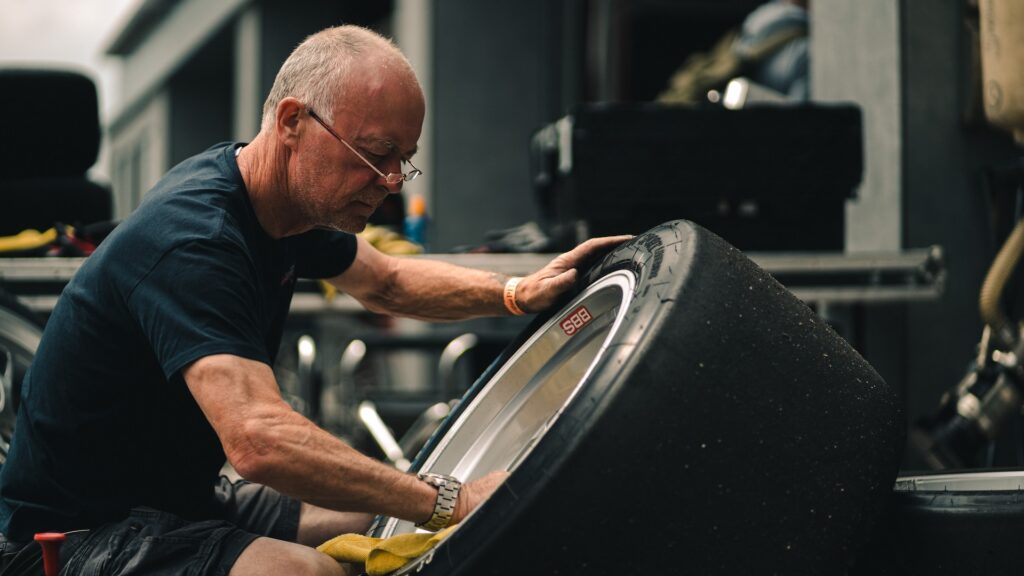
Throughout the 1980s and 1990s, the Imola Grand Prix became a regular fixture on the Formula One calendar, primarily hosting the San Marino Grand Prix. This period saw memorable races and iconic moments that etched Imola into motorsport history. However, tragedy struck the circuit on April 30, 1994, during the San Marino Grand Prix, when both Ayrton Senna and Roland Ratzenberger lost their lives in separate accidents. These tragic incidents led to significant safety improvements in Formula One and a revised layout of the circuit to enhance driver safety.

After the accidents, the Imola Grand Prix continued to be held, albeit with a name change following the death of Senna. The race became known as the Emilia Romagna Grand Prix, named after the region in which Imola is located. The event remained part of the Formula One calendar until 2006. During this period, some memorable races took place, including Michael Schumacher’s record-breaking sixth win at Imola in 2004, solidifying his legacy at the circuit.

Following its removal from the Formula One calendar, the Imola Grand Prix became a host for various other racing series, including the World Superbike Championship, GT Championships, and more. The circuit continued to attract motorsport enthusiasts from around the world, who sought its challenging nature and historic significance.

After a long hiatus, the Imola Grand Prix made a triumphant return to the Formula One calendar in 2020. Due to the COVID-19 pandemic, the event was added as a one-off race to the revised schedule. The race, once again named the Emilia Romagna Grand Prix, provided a thrilling spectacle for fans, with Mercedes driver Lewis Hamilton securing the victory.

In conclusion, the Imola Grand Prix holds a unique place in motorsport history. From its humble beginnings in the 1950s to its inclusion in various prestigious racing series, the circuit has witnessed countless thrilling races and iconic moments. Despite the tragic events of 1994, Imola continues to be recognized as an elite racing venue and a testament to the resilience and passion of Formula One and motorsport fans worldwide.

By admin

Leave a Reply

Your email address will not be published. Required fields are marked *

You missed

South West homeowners face seven-day waits for urgent repairs as tradie shortages continue to bite Fix Radio analysis shows the South West is among the slowest regions for urgent fixes, while Plymouth records one of the longest city-level waits in the UK The South West records an average 7-day wait for an urgent tradie fix. Plymouth records one of the longest city-level waits in the dataset, at 10 days. Across the 17 cities surveyed, the average wait for an urgent fix is just over 6 days. CITB says the UK construction industry needs to recruit the equivalent of 239,300 extra workers between 2025 and 2029. Analysis from Fix Radio shows that homeowners in the South West are facing an average seven-day wait for an urgent tradesperson fix, placing the region among the slower parts of the UK for repair response times. Based on Fix Radio’s analysis of city-level urgent repair wait-time data from Markel Direct’s Censuswide survey of UK homeowners, the findings point to continued pressure on trades capacity, local demand and labour availability across the region. The national picture remains highly uneven. The East of England records the shortest average wait at three days, followed by the North East on four days, the North West on 4.5 days and London on five. Wales and the South East each average six days, Yorkshire and the Humber sits at 6.5, while the South West, West Midlands, Scotland and Northern Ireland all come in at seven days. At the other end of the scale, the East Midlands records the longest average delay at nine days, leaving a six-day gap between the fastest and slowest regional averages in the dataset. The research also found that 44% of homeowners have already delayed repairs because of the cost of hiring a tradesperson, while city-level data shows waits stretching as high as 10 days in Plymouth for urgent issues. That makes the South West one of the clearest examples of how regional pressure can build when local demand, household repair needs and labour constraints begin to overlap. Set against a construction workforce already under strain, the figures point to a region where availability remains a growing issue for both customers and tradespeople. CITB forecasts that the industry will need to recruit the equivalent of 239,300 extra workers between 2025 and 2029, with the UK construction workforce expected to reach around 2.75 million by 2029. From Fix Radio’s perspective, the findings reflect a wider story around availability, local demand and the challenge of keeping enough skilled people in the pipeline. Waiting times are not only a sign of homeowner frustration. They also show where order books are full, where capacity is tight and where the wider conversation around skills and recruitment is becoming harder to ignore. In the South West, where regional averages are already above the national benchmark and Plymouth stands out as one of the slowest locations in the dataset, that pressure is becoming increasingly visible. About Fix Radio Fix Radio, the Builders Station is the home of entertainment, music and information for UK tradespeople. Since 2017 the station has been built from the ground-up with tradespeople in mind, providing a mixture of authentic trade voices, up-beat music and a schedule designed around the tradesperson’s day. The station’s schedule includes some of the biggest talent in the industry, including social media influencers the Bald Builders, Clive Holland of the BBC and formerly Cowboy Trap, the country’s most famous plasterer Chris Frediani from DIY SOS, plumbing influencers Andy Cam and Todd Glister, decorators Joel Bardall and Todd Von Joel, electrician turned YouTuber Thomas Nagy, Roofer of the Year Danny Madden, carpenter, craftsman and social media influencer Robin Clevett. Broadcasting nationally on DAB since May 2022, Fix Radio has an average reach of 833,545 tradespeople each week. The Builders Station also boasts 27.9 average weekly listening hours. Fix Radio’s audience reach and listening hours are audited by Nielsen.