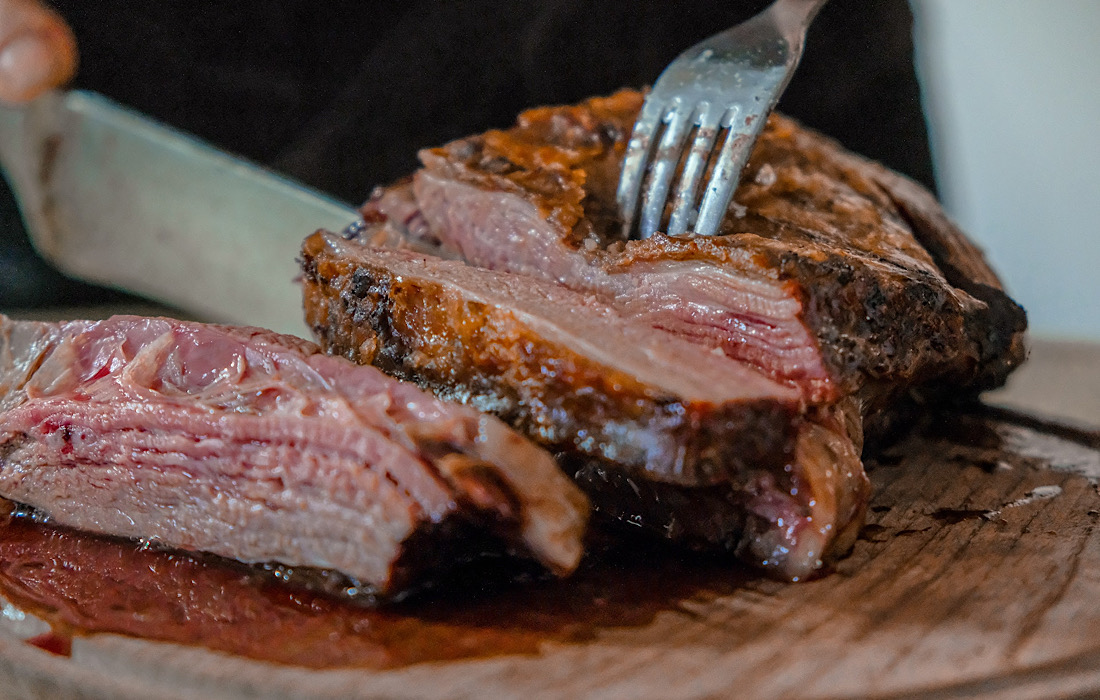
How Do You Cook The Perfect Steak?

There is nothing quite like a perfectly cooked steak. However, it takes more than simply throwing a piece of meat on the grill or in the oven to achieve perfection. To create a tender, juicy, and flavorful steak, it is important to pay attention to several key factors and techniques. Here are a few tips to help you cook the perfect steak:

Choosing Your Steak

The first step in cooking the perfect steak is selecting the right cut for your taste and preferences. Some of the most popular cuts include ribeye, filet mignon, New York strip, and sirloin. Ribeye is a well-marbled, flavorful cut that is perfect for those who prefer a more fatty and rich steak. Filet mignon is a leaner cut that is tender and buttery in texture. New York strip is a classic steakhouse cut that is rich and flavorful. Sirloin is a budget-friendly option that is leaner than other cuts but can still be tender and tasty when cooked correctly.

When selecting your steak, look for a cut with marbling, which is the fat that runs through the meat. This fat is what gives the steak flavor and tenderness. Additionally, make sure that the steak is fresh and has a bright, cherry-red color.

Preparing Your Steak

Before cooking your steak, it is important to allow it to come to room temperature. This helps the steak cook evenly and prevents it from being cold in the middle. Simply take the steak out of the refrigerator and let it sit at room temperature for about 30 minutes before cooking.

Next, season your steak with salt and pepper. This basic seasoning allows the natural flavor of the meat to shine through. You can also add other seasonings to your liking, such as garlic powder, onion powder, or dried herbs. Rub the seasoning onto both sides of the steak and let it sit for a few minutes to allow the flavors to absorb.

Cooking Your Steak

The most popular ways to cook steak are grilling, pan-searing, and broiling. Each method has its own advantages and disadvantages, so it is important to choose the one that best suits your needs and preferences.

Grilling

Grilling is a classic way to cook steak and gives it a distinctive smoky flavor. To grill your steak, heat your grill to high heat and brush the grates with oil to prevent sticking. Place the steak on the grill and cook on one side for 4-5 minutes for medium-rare, flipping only once. Use a meat thermometer to check the internal temperature of the steak. For medium-rare, the temperature should read 135-140°F.

Pan-Searing

Pan-searing is a great option for those who don’t have access to a grill. To pan-sear your steak, heat a cast-iron skillet over high heat and add a small amount of oil. Once the oil is hot, add the steak and cook for 4-5 minutes on one side, flipping only once. Use a meat thermometer to check the internal temperature of the steak. For medium-rare, the temperature should read 135-140°F.

Broiling

Broiling is a quick and easy way to cook steak. To broil your steak, preheat your oven to the broil setting and place the steak on a broiler pan. Broil for 4-5 minutes on one side, flip the steak, and broil for an additional 4-5 minutes. Use a meat thermometer to check the internal temperature of the steak. For medium-rare, the temperature should read 135-140°F.

Resting Your Steak

Once your steak is cooked to perfection, it is important to let it rest before serving. This allows the juices to redistribute throughout the steak, making it more tender and juicy. Remove the steak from the heat and let it rest on a cutting board for at least 5 minutes before slicing and serving.

Conclusion

By following these simple tips, you can cook the perfect steak every time. Whether you prefer your steak grilled, pan-seared, or broiled, the key is to choose a high-quality cut of meat, season it well, and cook it to the right temperature. With a little practice, you can become a steak-cooking expert and impress your friends and family with your culinary skills!

By admin

Leave a Reply

Your email address will not be published. Required fields are marked *

You missed

South West homeowners face seven-day waits for urgent repairs as tradie shortages continue to bite Fix Radio analysis shows the South West is among the slowest regions for urgent fixes, while Plymouth records one of the longest city-level waits in the UK The South West records an average 7-day wait for an urgent tradie fix. Plymouth records one of the longest city-level waits in the dataset, at 10 days. Across the 17 cities surveyed, the average wait for an urgent fix is just over 6 days. CITB says the UK construction industry needs to recruit the equivalent of 239,300 extra workers between 2025 and 2029. Analysis from Fix Radio shows that homeowners in the South West are facing an average seven-day wait for an urgent tradesperson fix, placing the region among the slower parts of the UK for repair response times. Based on Fix Radio’s analysis of city-level urgent repair wait-time data from Markel Direct’s Censuswide survey of UK homeowners, the findings point to continued pressure on trades capacity, local demand and labour availability across the region. The national picture remains highly uneven. The East of England records the shortest average wait at three days, followed by the North East on four days, the North West on 4.5 days and London on five. Wales and the South East each average six days, Yorkshire and the Humber sits at 6.5, while the South West, West Midlands, Scotland and Northern Ireland all come in at seven days. At the other end of the scale, the East Midlands records the longest average delay at nine days, leaving a six-day gap between the fastest and slowest regional averages in the dataset. The research also found that 44% of homeowners have already delayed repairs because of the cost of hiring a tradesperson, while city-level data shows waits stretching as high as 10 days in Plymouth for urgent issues. That makes the South West one of the clearest examples of how regional pressure can build when local demand, household repair needs and labour constraints begin to overlap. Set against a construction workforce already under strain, the figures point to a region where availability remains a growing issue for both customers and tradespeople. CITB forecasts that the industry will need to recruit the equivalent of 239,300 extra workers between 2025 and 2029, with the UK construction workforce expected to reach around 2.75 million by 2029. From Fix Radio’s perspective, the findings reflect a wider story around availability, local demand and the challenge of keeping enough skilled people in the pipeline. Waiting times are not only a sign of homeowner frustration. They also show where order books are full, where capacity is tight and where the wider conversation around skills and recruitment is becoming harder to ignore. In the South West, where regional averages are already above the national benchmark and Plymouth stands out as one of the slowest locations in the dataset, that pressure is becoming increasingly visible. About Fix Radio Fix Radio, the Builders Station is the home of entertainment, music and information for UK tradespeople. Since 2017 the station has been built from the ground-up with tradespeople in mind, providing a mixture of authentic trade voices, up-beat music and a schedule designed around the tradesperson’s day. The station’s schedule includes some of the biggest talent in the industry, including social media influencers the Bald Builders, Clive Holland of the BBC and formerly Cowboy Trap, the country’s most famous plasterer Chris Frediani from DIY SOS, plumbing influencers Andy Cam and Todd Glister, decorators Joel Bardall and Todd Von Joel, electrician turned YouTuber Thomas Nagy, Roofer of the Year Danny Madden, carpenter, craftsman and social media influencer Robin Clevett. Broadcasting nationally on DAB since May 2022, Fix Radio has an average reach of 833,545 tradespeople each week. The Builders Station also boasts 27.9 average weekly listening hours. Fix Radio’s audience reach and listening hours are audited by Nielsen.