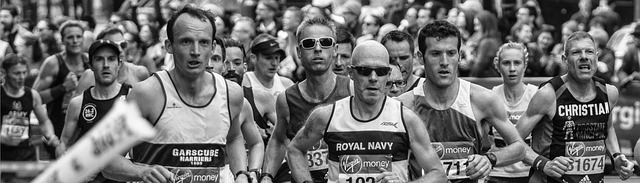
The London Marathon is one of the most iconic and prestigious marathons in the world, attracting runners from all corners of the globe. The race is held annually in London, England and covers a distance of 26.2 miles through the streets of the city. The event has a rich history that dates back to its inaugural race in 1981, and has since become a staple in the global running community.

The idea for the London Marathon was conceived by former Olympic champion Chris Brasher and athlete John Disley in the early 1980s. Inspired by the New York City Marathon and the running boom that was sweeping the world at the time, Brasher and Disley wanted to create a world-class marathon in London that would not only showcase the city’s landmarks, but also serve as a fundraiser for sporting and recreational facilities in the UK.

Funny Outfits Seen at the London Marathon

The London Marathon is one of the most prestigious and popular marathons in the world, attracting thousands of runners from all over the globe. While the focus is usually on the impressive athletic feats of the participants, there is also a lighter side to the event. One of the things that makes the London Marathon so unique is the wide array of creative and funny outfits that runners choose to wear as they race through the streets of London. From elaborate costumes to hilarious accessories, these outfits add an extra element of fun and entertainment to the race.

One of the most common types of funny outfits seen at the London Marathon is the costume. Runners will often dress up as their favorite characters from movies, books, or TV shows, creating a colorful and whimsical spectacle as they run. From superheroes to cartoon characters to historical figures, the range of costumes is truly impressive. It’s not uncommon to see runners dressed as giant bananas, superheroes with capes flying in the wind, or even as the Queen of England herself. These costumes not only add a touch of humor to the race but also help to raise awareness for various causes and charities.

Another popular trend among London Marathon runners is the use of funny accessories. While some runners prefer to keep their outfits simple and easy to run in, others go all out with accessories that are sure to turn heads. From wigs and hats to inflatable props and silly sunglasses, there is no shortage of creativity on display. Some runners even go so far as to carry signs or banners with funny slogans or messages, adding an extra element of humor to their outfits. These accessories not only provide entertainment for spectators along the route but also serve as a way for runners to express their unique personalities and sense of humor.

The first London Marathon took place on March 29, 1981 and attracted over 20,000 runners from around the world. The race started in Greenwich Park and finished at Buckingham Palace, passing through famous London landmarks such as Tower Bridge, the Tower of London, and Big Ben along the way. The inaugural race was won by American Dick Beardsley and Norwegian Inge Simonsen, who crossed the finish line hand in hand in a dramatic and memorable finish.

By admin

Leave a Reply

Your email address will not be published. Required fields are marked *

You missed

South West homeowners face seven-day waits for urgent repairs as tradie shortages continue to bite Fix Radio analysis shows the South West is among the slowest regions for urgent fixes, while Plymouth records one of the longest city-level waits in the UK The South West records an average 7-day wait for an urgent tradie fix. Plymouth records one of the longest city-level waits in the dataset, at 10 days. Across the 17 cities surveyed, the average wait for an urgent fix is just over 6 days. CITB says the UK construction industry needs to recruit the equivalent of 239,300 extra workers between 2025 and 2029. Analysis from Fix Radio shows that homeowners in the South West are facing an average seven-day wait for an urgent tradesperson fix, placing the region among the slower parts of the UK for repair response times. Based on Fix Radio’s analysis of city-level urgent repair wait-time data from Markel Direct’s Censuswide survey of UK homeowners, the findings point to continued pressure on trades capacity, local demand and labour availability across the region. The national picture remains highly uneven. The East of England records the shortest average wait at three days, followed by the North East on four days, the North West on 4.5 days and London on five. Wales and the South East each average six days, Yorkshire and the Humber sits at 6.5, while the South West, West Midlands, Scotland and Northern Ireland all come in at seven days. At the other end of the scale, the East Midlands records the longest average delay at nine days, leaving a six-day gap between the fastest and slowest regional averages in the dataset. The research also found that 44% of homeowners have already delayed repairs because of the cost of hiring a tradesperson, while city-level data shows waits stretching as high as 10 days in Plymouth for urgent issues. That makes the South West one of the clearest examples of how regional pressure can build when local demand, household repair needs and labour constraints begin to overlap. Set against a construction workforce already under strain, the figures point to a region where availability remains a growing issue for both customers and tradespeople. CITB forecasts that the industry will need to recruit the equivalent of 239,300 extra workers between 2025 and 2029, with the UK construction workforce expected to reach around 2.75 million by 2029. From Fix Radio’s perspective, the findings reflect a wider story around availability, local demand and the challenge of keeping enough skilled people in the pipeline. Waiting times are not only a sign of homeowner frustration. They also show where order books are full, where capacity is tight and where the wider conversation around skills and recruitment is becoming harder to ignore. In the South West, where regional averages are already above the national benchmark and Plymouth stands out as one of the slowest locations in the dataset, that pressure is becoming increasingly visible. About Fix Radio Fix Radio, the Builders Station is the home of entertainment, music and information for UK tradespeople. Since 2017 the station has been built from the ground-up with tradespeople in mind, providing a mixture of authentic trade voices, up-beat music and a schedule designed around the tradesperson’s day. The station’s schedule includes some of the biggest talent in the industry, including social media influencers the Bald Builders, Clive Holland of the BBC and formerly Cowboy Trap, the country’s most famous plasterer Chris Frediani from DIY SOS, plumbing influencers Andy Cam and Todd Glister, decorators Joel Bardall and Todd Von Joel, electrician turned YouTuber Thomas Nagy, Roofer of the Year Danny Madden, carpenter, craftsman and social media influencer Robin Clevett. Broadcasting nationally on DAB since May 2022, Fix Radio has an average reach of 833,545 tradespeople each week. The Builders Station also boasts 27.9 average weekly listening hours. Fix Radio’s audience reach and listening hours are audited by Nielsen.