
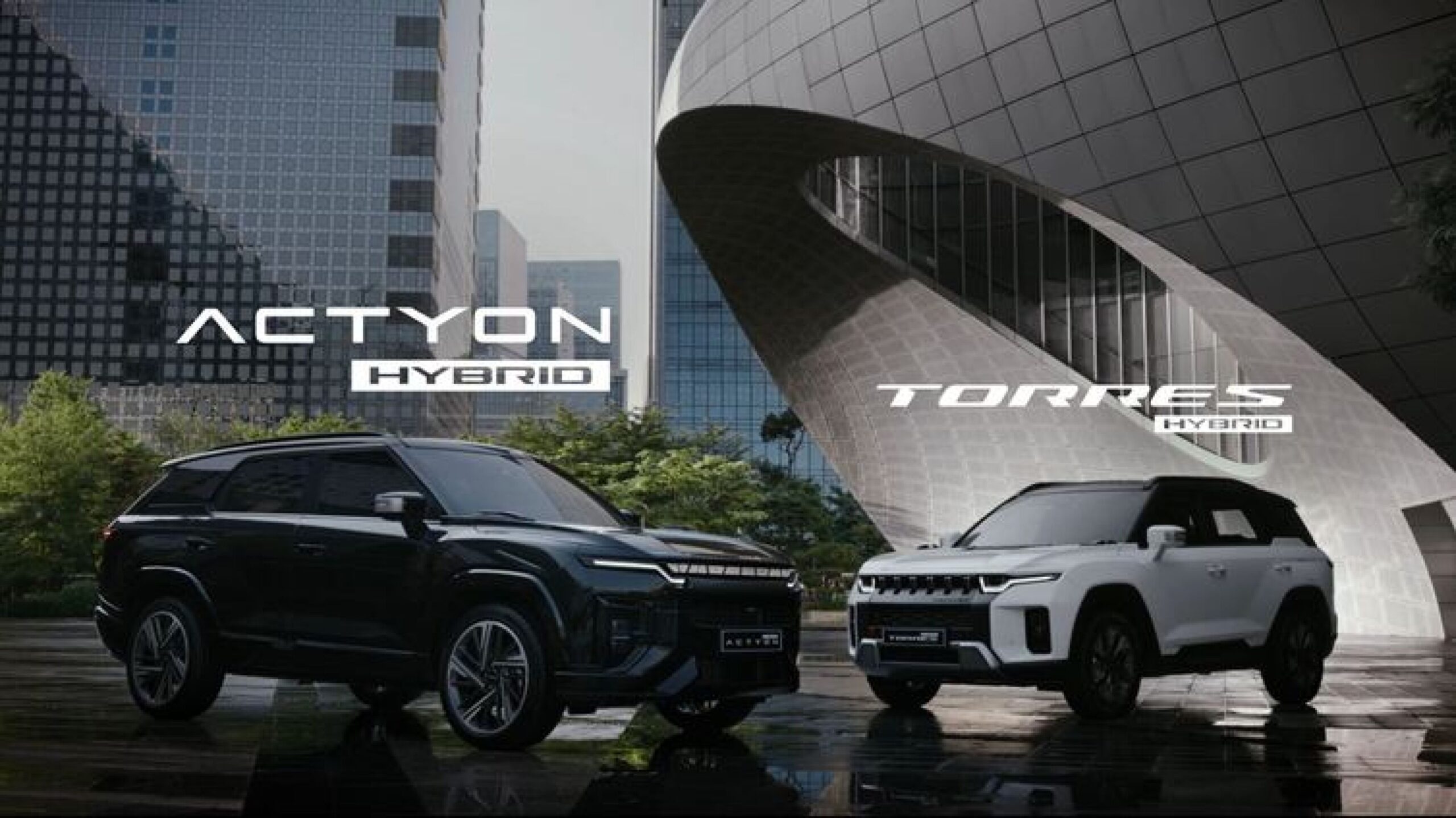
- Dual Tech Hybrid System combines a new dedicated HEV-1.5-litre turbo petrol engine and e-DHT hybrid transmission to deliver maximum efficiency and a drive feel closest to a full electric vehicle
- Equipped with a class-leading 1.83kWh hybrid battery, the largest in its segment, paired with a lightweight 12V LFP low-voltage system
- Dual-motor transmission supports nine different driving modes, including EV mode, HEV mode (series-parallel), and engine drive mode, delivering a smooth, versatile, and quiet performance
- Available now with Torres Hybrid K40 starting at £35,995 and Actyon Hybrid at £38,995
KGM Motors UK, formerly SsangYong, is delighted to launch its next-generation Dual Tech Hybrid powertrain, debuting in the new Torres Hybrid and Actyon Hybrid. The advanced series-parallel hybrid system delivers a driving experience that is as close as possible to a full electric vehicle while preserving the long-range capability, durability and towing-friendly character expected of an authentic KGM SUV. It marks a major step in KGM’s strategy to expand its electrified line-up and introduce new powertrains tailored to UK customers.
Developed in collaboration with BYD, a global leader in low and zero-emission vehicle powertrain development, the Dual Tech Hybrid System perfectly combines a 1.5-litre turbo petrol engine with an e-DHT hybrid transmission and in-series dual motors. By managing how and when each component contributes power, the system delivers strong performance and refined progress while maximising real-world efficiency across a wide variety of driving conditions.
The new-designed petrol engine employs Miller-cycle operation to improve thermal efficiency and a variable geometry turbocharger to deliver responsive performance across the rev range. Fuel injection pressure has been raised from 250 bar to 350 bar, improving combustion efficiency to deliver more power and lower emissions. Advanced cylinder-block coatings have also been applied to boost durability, helping the engine cope with the frequent start-stop cycles and changing loads typical of hybrid driving.
In this configuration, the engine delivers 149.6PS and 220Nm of torque and frequently operates primarily as a high-efficiency generator, supplying electrical energy to the dual motors and battery rather than always driving the wheels directly.
The Dual Tech Hybrid System itself is built around Korea’s first P1 + P3 dual-motor architecture, derived from BYD’s proven plug-in hybrid technology and adapted by KGM as a full hybrid for Torres Hybrid and Actyon Hybrid. A large-capacity 130kW P3 drive motor is mounted close to the drive shaft so that it can respond instantly to throttle inputs, providing strong acceleration and confident overtaking. This motor delivers up to 177ps and 300Nm of torque, giving both hybrid SUVs the effortless, linear response drivers expect from an electrified powertrain.
The e-DHT, an electrified Dual Hybrid Transmission developed specifically for this application, supports electric-only EV driving, series hybrid operation where the engine works primarily as a generator, and parallel hybrid and engine drive modes where the engine and motors combine or hand over depending on speed and load. The Dual Tech Hybrid System also achieves optimal power distribution by simultaneously carrying out charging and electric driving with the dual motors, allowing the system to recover more energy and redeploy it more intelligently in everyday use.
The system also recognises a wide range of driving environments and automatically switches between nine operating modes, including EV mode, HEV mode (series-parallel), and engine drive mode to deliver smooth, versatile and quiet performance. This means the driver does not need to manage the powertrain manually; instead, the vehicle constantly selects the most efficient configuration for the conditions, whether that is crawling through city traffic, cruising at motorway speeds or tackling hilly, mixed routes.
To help drivers understand what the system is doing, an energy flow diagram is displayed in the instrument cluster. This clear graphic shows in real time whether the vehicle is operating in electric-only mode, serial hybrid mode or parallel hybrid mode, how energy is flowing between the engine, motors and battery, and when regeneration is taking place.
All-electric driving is possible up to 62mph, creating a calm, near-silent environment with instant torque and smooth, one-step acceleration. On faster roads and motorways, the high-output drive motor and petrol engine work together to provide robust acceleration and efficient high-speed cruising.
To enhance efficiency even further, the Dual Tech Hybrid powertrain incorporates an adjustable regenerative braking system with three selectable levels of deceleration. Drivers can tailor the feel to suit their preferences, from a lighter, more conventional response to stronger braking that maximises energy recovery and reduces reliance on the friction brakes. When Smart Regenerative Braking is activated, the system automatically adapts the level of regenerative deceleration according to the distance to the vehicle ahead, helping to make braking smoother in stop-start traffic while capturing as much energy as possible.
Both Torres Hybrid and Actyon Hybrid are equipped with extensive sound-absorbing and insulating materials, positioned throughout the structure and cabin to block engine and acceleration noise, ensuring that when the powertrain is operating outside of EV mode, the interior remains quiet. In addition, smart frequency dampers are applied to the shock absorbers, improving body control over uneven surfaces and providing a more stable and comfortable ride over a wide range of speeds and road conditions.
Kevin Griffin, Managing Director of KGM Motors UK, said: “The new Dual Tech Hybrid powertrain in Torres Hybrid and Actyon Hybrid shows exactly where KGM is heading in the UK. It gives our customers the smooth, near-silent feel they associate with electric vehicles, but with the range, robustness and everyday usability they expect from a KGM. This technology is the foundation for our next generation of powertrains, as we bring more practical, real-world electrified options to the market.”
Both the Torres Hybrid and Actyon Hybrid are designed with a clear connection to the brand’s 70-plus-year Korean heritage, while offering an extensive range of driver assistance, convenience and safety systems as standard. The Actyon Hybrid builds on the strong Torres Hybrid specification with a 360-degree camera, premium suede interior, noise-cancelling tyres, a hexagon steering wheel and a kick-operation power tailgate.
Customers can find more information or book a test drive, here: www.kgm-motors.co.uk