
GEM Motoring Assist’s head of road safety, James Luckhurst, calls for brave new steps to overhaul a system that’s dangerously out of date
- GEM’s Head of Road Safety comments on most recent eyesight cases
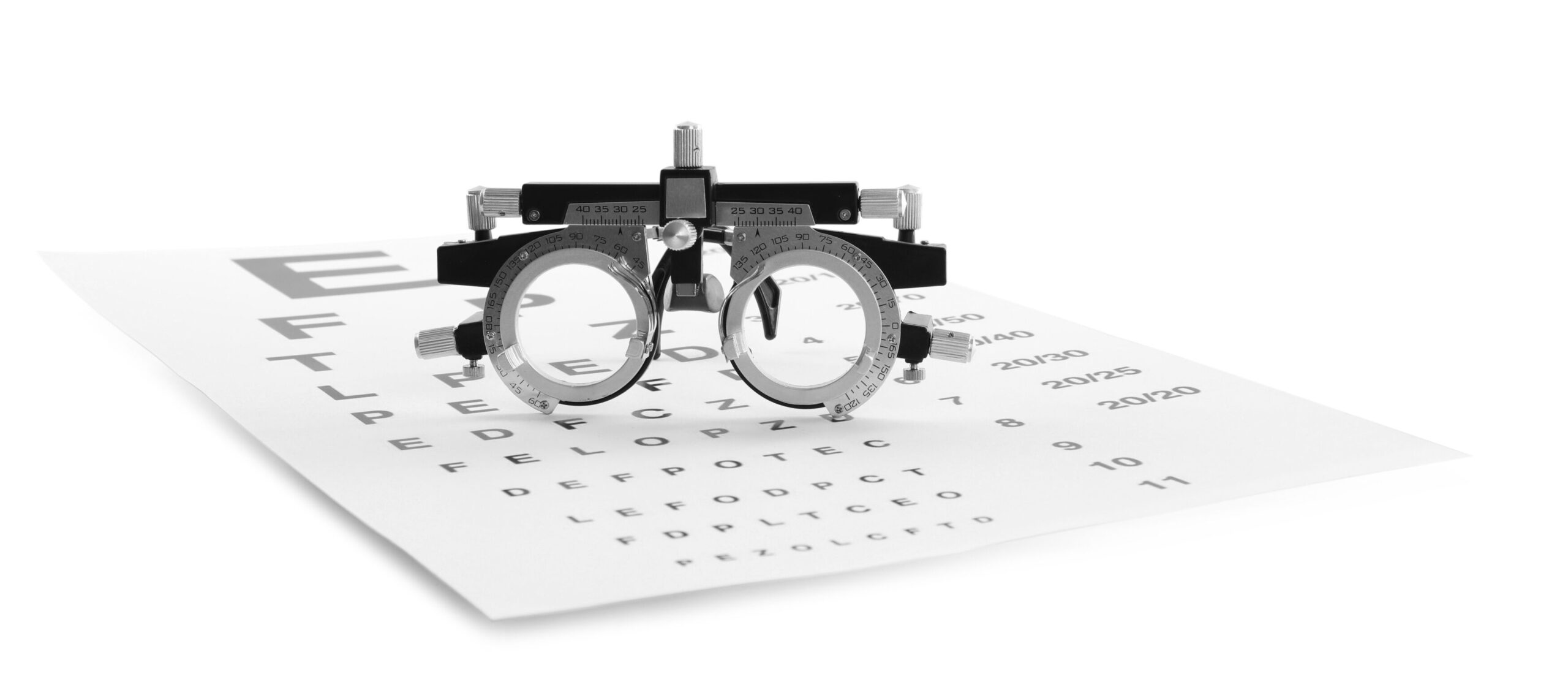
- Mandatory eyesight testing needs to be introduced whenever a driving licence is renewed
- Opticians should have a direct reporting line to the DVLA
Everyone loves the freedom a car can provide; but driving is a privilege and not a right. We need to accept that for each of us there will be a time to stop. It’s best done as a positive decision, based on careful thought and with the support of family members and friends. Waiting for a near miss, a minor bump or a more serious incident to take place before thinking about whether or not to hang up the keys is irresponsible. Refusing to accept there’s a problem is selfish and dangerous.
There are too many incidents where drivers simply ignore the warnings. They fail to comply with legal instructions not to drive and go on to hurt or kill. Peter Gardner, an 82-year-old motorist, was jailed for six months in 2022 after pleading guilty to causing death by careless driving. His car hit 70-year-old cyclist Jim Tassell near Andover in 2021. Jim died five days later from his injuries. Gardner was unable to read more than three metres (10 feet) ahead; the legal minimum requirement is 20 metres (65 feet).
More recently, four pedestrians (Marie Cunningham (79), Grace Foulds (85), Peter Westwell (80) and Anne Ferguson (75)) were killed by drivers who knowingly drove despite failing eyesight. It was found that Glyn Jones (68) couldn’t even see the steering wheel in front of him; he was subsequently jailed for seven years. An 81-year-old ignored medical advice and a 72-year-old van driver concealed cataracts.
A senior coroner condemned the UK’s “laxest in Europe” self-reporting system, urging mandatory eyesight testing. Moreover, a recent study by Medical Xpress estimates 720,000 UK drivers have defective vision.
From the age of 70, drivers must renew their licences every three years. But the process wrongly relies on self-certification of fitness to drive, despite incontrovertible evidence that age-related vision decline leads to growing risks. The need for fundamental reform is once again in the headlines, this time because of coroner findings that label current visual standards as “ineffective and unsafe”.
There are no mandatory medical or vision checks during a licence renewal. Drivers simply declare every three years that they meet the minimum eyesight requirement, which is to read a number plate at a distance of 20 metres. GEM’s position, in line with other road safety organisations, is that this is inadequate. After all, older motorists are self-certifying, despite being at increasing risk from conditions such as cataracts, glaucoma and macular degeneration.
Part of the problem is that the changes in our vision can go unnoticed. By the age of 60, the risk of uncorrected refractive errors, reduced contrast sensitivity, and slower light adaptation rises sharply. One in four people admitted being concerned about someone they knew who was driving with impaired vision, according to the Association of Optometrists.
The Older Drivers Task Force recommends mandatory eye tests and raising the self-declaration age to 75, accompanied by proof of vision checks. Yet the government has so far failed to act. GEM favours the ‘Driver MOT’, a three-yearly check-up that focuses on vision, reaction times and cognitive awareness. It’s not full retesting, but it would go a long way to identify drivers at risk, without imposing unnecessary penalties on those drivers fortunate enough to retain good standards of vision.
Of course, vision is just one piece in an often complex jigsaw puzzle that’s not well served by self-regulation and inconsistent third-party reporting by medical professionals and family members.
We support some of the great work done by the Older Drivers Forum to raise awareness of vision issues among older drivers. We know that no one wants their independence restricted, particularly those in rural areas where public transport is poor. But doing nothing means the risk of more avoidable deaths and life-changing injuries remains, caused by people whose quality of vision means they should no longer be driving.
Mandatory eye tests need to be introduced for everyone at the time of licence renewal. Optometrists should report results directly to the DVLA. But we can’t wait for changes in the law, so let’s also encourage everyone to seek a driver MOT of some sort at licence renewal time. Let’s also support initiatives to raise public awareness about the critical role of vision in safe driving, and remind everyone aged over 60 that a great place to start is with a FREE eye test.
Finally, let’s make clear that this has nothing to do restricting freedom. It’s all about safer roads, while helping everyone accept that a perceived ‘right to drive’ doesn’t unnecessarily put someone else’s life at risk.